Category Archives: New Zealand

New Zealand … The Kepler Track Great Walk (60km) … and beyond …

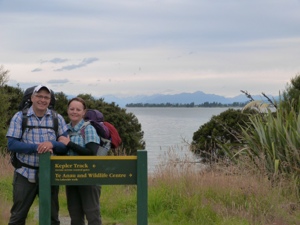
Sun, 3rd Feb: Day 1 – The Kepler Track, 60km Great Walk over 4 days!!!!!
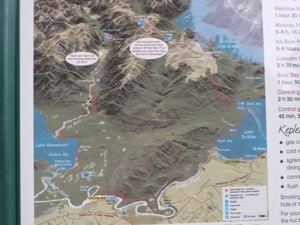
Encompassing the best of everything from the shores of Lake Te Anau and Lake Manapouri and their peaceful beech forest backdrops to the exposed alpine tussock lands, the Kepler Track has something for everyone. Ideal for entry-level tramping, this 60 km circuit is enjoyed over 3 or 4 days. Well-maintained tracks lead us away from the everyday world to sidle around the rocky peak of Mt Luxmore, hike along ridges and down into the lush Iris Burn valley. Spacious huts offer stunning alpine panoramas and cosy evenings after our day’s exertions. The Kepler Track is an incredible wilderness experience right on Te Anau’s doorstep and a fantastic opportunity to experience the most accessible of Fiordland’s Great Walks.
20130406-145817.jpg

20130406-152119.jpg

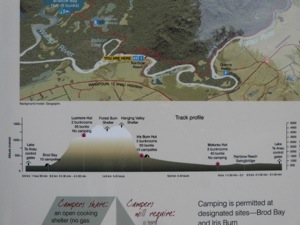
Day 1: Kepler Track Car Park to Luxmore Hut / 13.8 km, 5–6 hours
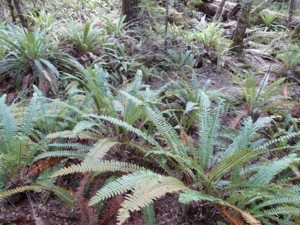
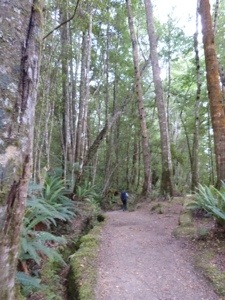
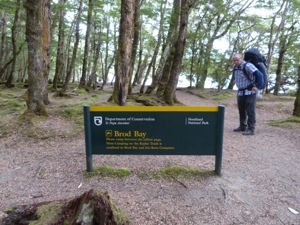
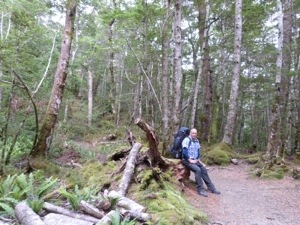
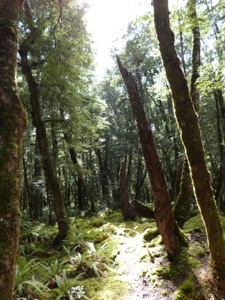
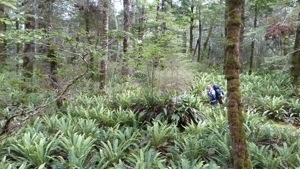
The track starts with a pleasant walk through beech forest along the shore of Lake Te Anau, the largest body of fresh water in Australasia, to Brod Bay.

20130406-222107.jpg

20130406-222119.jpg

20130406-222131.jpg

20130406-222151.jpg

20130406-222200.jpg

20130406-222208.jpg

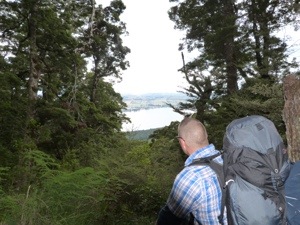
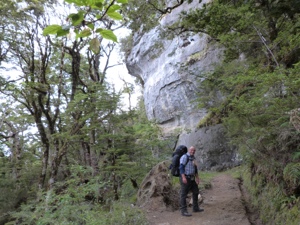
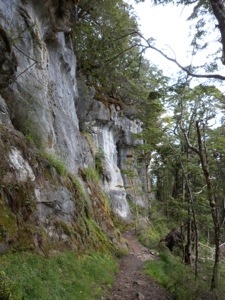
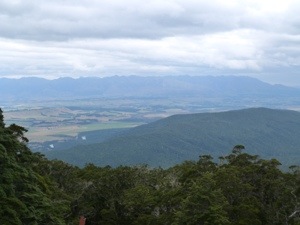
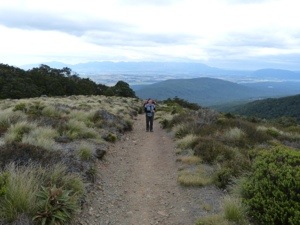
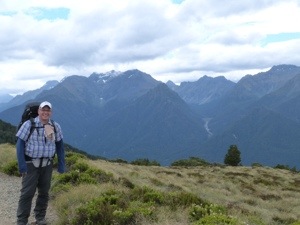
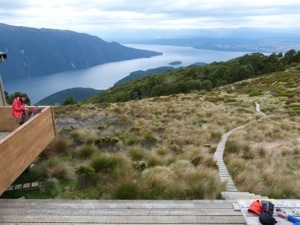
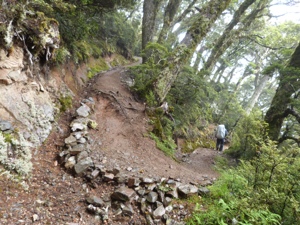
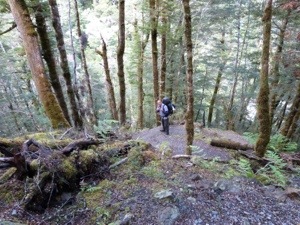
From here a challenging climb leads through forest, passing under impressive limestone bluffs, before emerging above the bush line to panoramic views of the Te Anau Basin and surrounding mountains.

20130406-222449.jpg

20130406-222500.jpg

20130406-222508.jpg

20130406-222530.jpg

20130406-222548.jpg

20130406-222556.jpg

20130406-222603.jpg

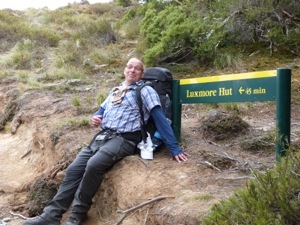
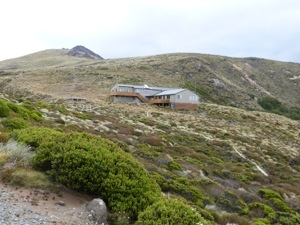
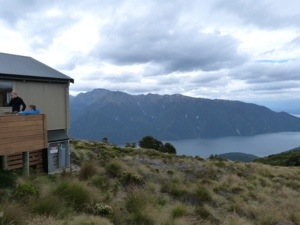
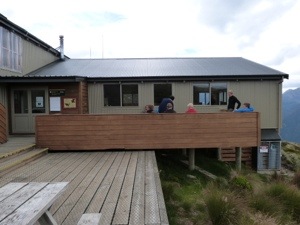
Luxmore Hut (1085 metres) is a 45 minute walk from the bush line.

20130406-222912.jpg

20130406-222931.jpg

20130406-222938.jpg

20130406-222953.jpg

20130406-223015.jpg

20130406-223047.jpg

20130406-223102.jpg
20130406-224030.jpg

20130406-224041.jpg

Mon, 4th Feb: Day 2: Luxmore Hut to Iris Burn Hut / 14.6 km, 5–6 hours
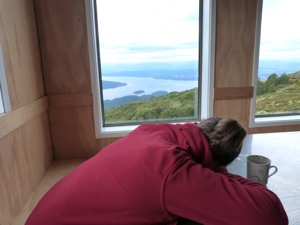
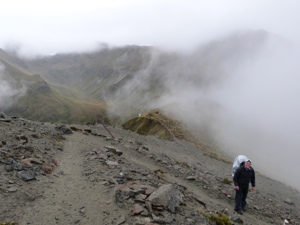
We start our day on top of the world. Departing Luxmore Hut, it is chucking down and it is so overcast.

20130406-223545.jpg

20130406-223610.jpg

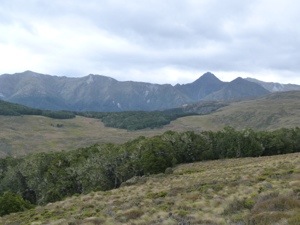
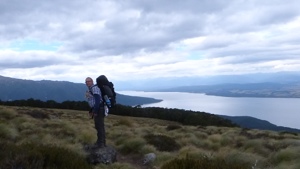
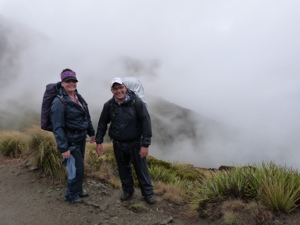
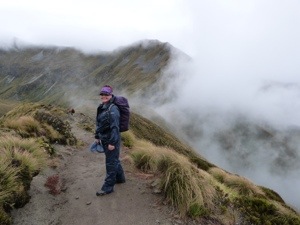
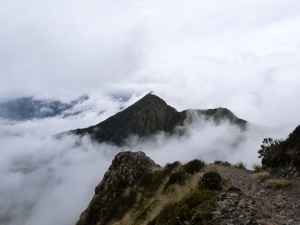
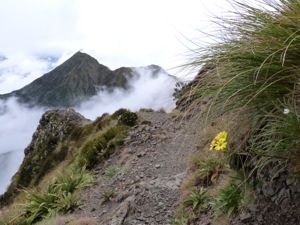
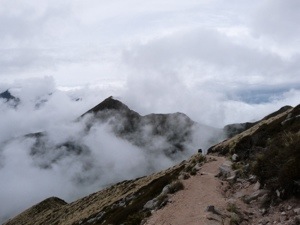
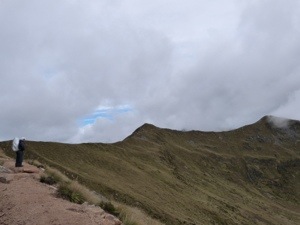
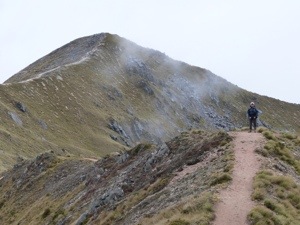
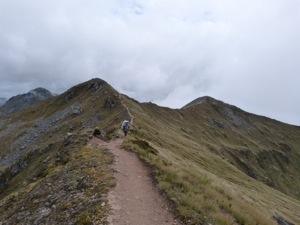
However, we get ready in our waterproofs and join the track which climbs to a ridge just below Mt Luxmore, with stunning views across the south fiord of Lake Te Anau to the Murchison Mountains—home of the rare, flightless takahē.

20130406-224532.jpg

20130406-224540.jpg

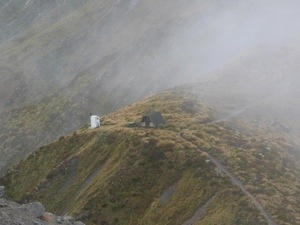
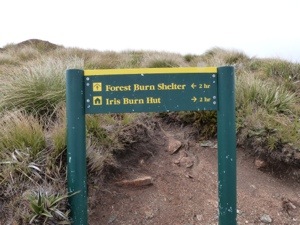
From here it winds its way to the Hanging Valley Shelter, before descending through a series of zigzags to the Iris Burn Hut.

20130406-230006.jpg

20130406-230016.jpg

20130406-230045.jpg

20130406-230057.jpg

20130406-230110.jpg

20130406-230116.jpg

20130406-230145.jpg

20130406-230155.jpg

20130406-230218.jpg

20130406-230300.jpg

20130406-230307.jpg

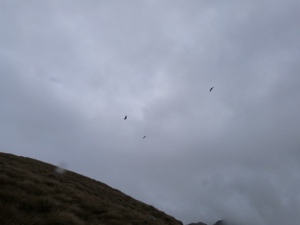
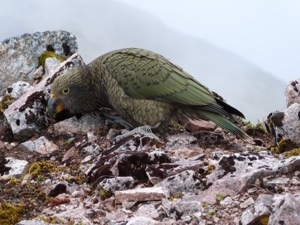
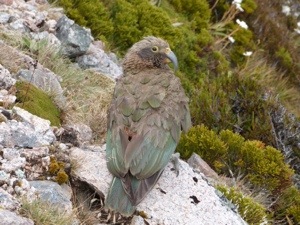
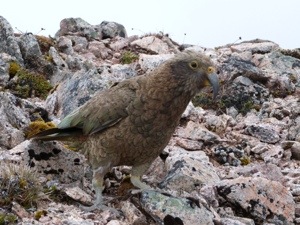
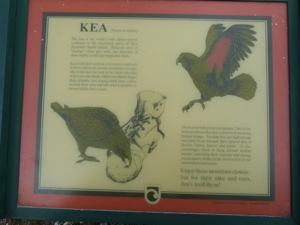
It is up here where we see the Kea for the first time flying around. The Kea is a large species of parrot found in forested and alpine regions of the South Island of New Zealand. About 48 cm (19 in) long, it is mostly olive-green with a brilliant orange under its wings and has a large, narrow, curved, grey-brown upper beak. The Kea is the world’s only alpine parrot. Now uncommon, the Kea was once killed for bounty due to concerns by the sheep-farming community that it attacked livestock, especially sheep. It received full protection only in 1986.

20130406-230921.jpg

20130406-230929.jpg

20130406-230944.jpg

20130406-231002.jpg

20130406-231207.jpg

Kea are known for their intelligence and curiosity, both vital to their survival in a harsh mountain environment. Kea can solve logical puzzles, such as pushing and pulling things in a certain order to get to food, and will work together to achieve a certain objective. We are pleased to meet these guys on our Great Walk 🙂

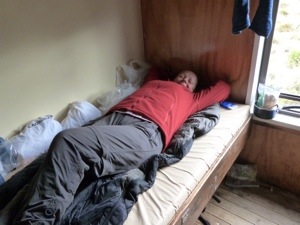
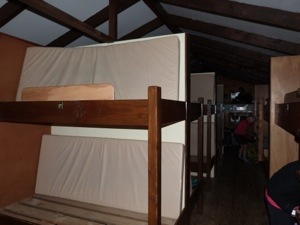
A welcoming sight after a day on the tops, our hut is situated in a large tussock clearing. We pick our bunks and freshen up before sorting our packet tea out.

20130406-231842.jpg

20130406-231854.jpg

20130406-231912.jpg

20130406-231929.jpg

20130406-231946.jpg

20130406-231954.jpg

20130406-232004.jpg

20130406-232014.jpg

As happened last night, the Ranger here gives us our briefing in the evening and encourages us to listen for kiwi calling at night – and hear them we certainly do ! So they are about!

Tue, 5th Feb: Day 3: Iris Burn Hut to Moturau Hut / 16.2 km, 5–6 hours
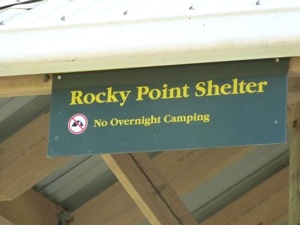
Today the ever-changing scenery starts with beech forest. The track climbs over a low saddle, then down past the big slip of 1984 to Rocky Point.

20130406-232539.jpg

20130406-232552.jpg

20130406-232604.jpg

20130406-232617.jpg

20130406-232624.jpg

20130406-232641.jpg

20130406-232650.jpg

20130406-232658.jpg

20130406-232708.jpg

20130406-232715.jpg

20130406-232722.jpg

20130406-232729.jpg

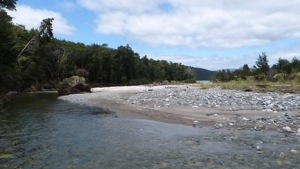
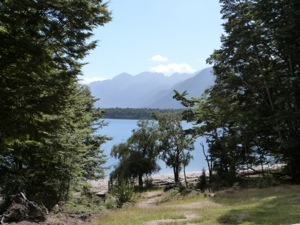
Below Rocky Point the track winds through a gorge and lowland beech and podocarp forest, before reaching the shore of beautiful Lake Manapouri.

20130406-233451.jpg

20130406-233507.jpg

20130406-233519.jpg

20130406-233525.jpg

20130406-233538.jpg

20130406-233549.jpg

20130406-233638.jpg

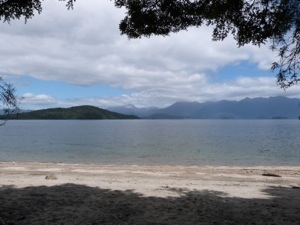
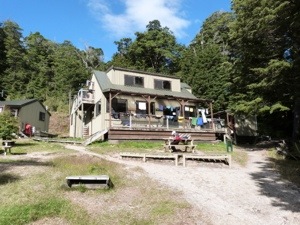
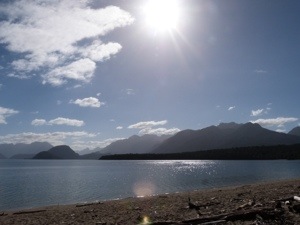
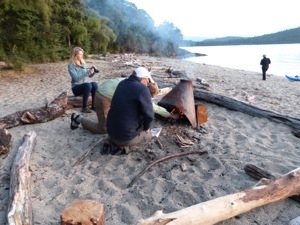
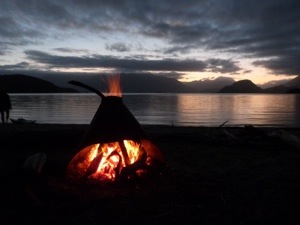
Moturau Hut is situated beside a beautiful beach, with stunning views of the lake. It is by far the best location for exhausted trekkers to spend their night on the track. We have a lovely evening relaxing here before watching a stunning sunset over the lake. Neil gets a fire going on the beach and a group of trekkers join us for an hour or so sharing stories before it’s ‘lights out’. An amazing evening 😀

20130406-233918.jpg

20130406-233924.jpg

20130406-233931.jpg

20130406-233939.jpg

20130406-233947.jpg

20130406-234003.jpg

20130406-234013.jpg

20130406-234025.jpg

20130406-234033.jpg

20130406-234052.jpg

20130406-234101.jpg

20130406-234113.jpg

Wed, 6th Feb: Day 4: Moturau Hut to the Kepler Track Car Park / 15.5 km, 4–5 hours
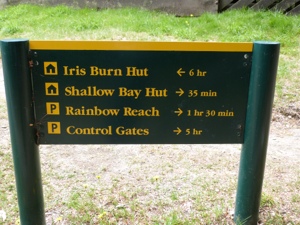
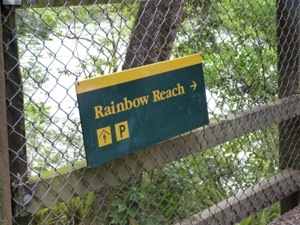
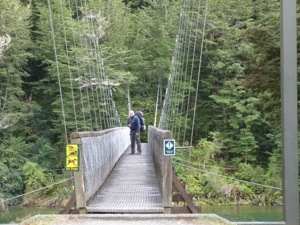
The last day is a moderate stroll through beech forest, crossing a unique and fragile wetland. The track then follows the Waiau River terrace to the swing bridge at Rainbow Reach where we meet the shuttle van which takes us back to where we started at the Lake Te Anau control gates and the Kepler Track car park.

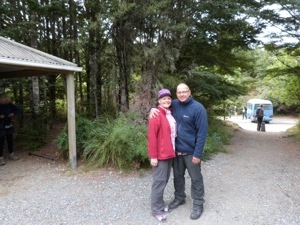
Wow, what an amazing effort and we congratulate each other on this remarkable achievement. We carried all our equipment over the whole 60km! Neil was my inspiration and kept me going right until the end – if he was able to carry his big rucksack (with pots, pans, utensils, 4 days food and clothing) then I had no reason to grumble about mine (day pack with lunch and snacks, the ipad and camera). He did a tremendous job and we both felt the trek would be challenging enough without the rucksacks so we had a lot to celebrate!

20130406-235232.jpg

20130406-235241.jpg

20130406-235255.jpg

20130406-235304.jpg

20130406-235320.jpg

20130406-235336.jpg

20130406-235345.jpg

20130406-235354.jpg

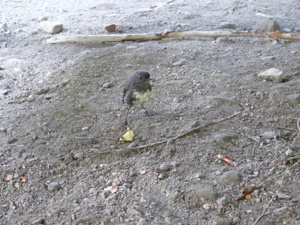
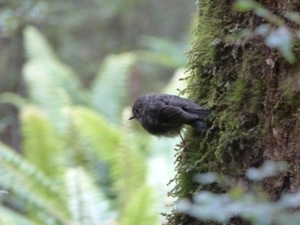
It’s worth mentioning at this stage that throughout the last few days we have not seen much wildlife. We’ve seen dead deer being airlifted out of the forest (pest control) and heard birds but apart from the robin that joined us for lunch one day and the Kea mountain parrots all we spotted was the two fellows below …

20130407-000301.jpg

20130407-000307.jpg

20130406-234658.jpg – this is what we did!

20130406-234711.jpg – good or what!

20130406-234646.jpg

We wasted no time in offloading our baggage and jumping in the car to commence our 3hr journey to Queenstown – and another stunning journey it was!!!!

20130520-033649.jpg

20130520-033705.jpg

20130520-033722.jpg

20130520-033734.jpg

20130520-033748.jpg

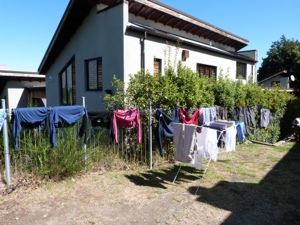
On arrival at Queenstown we dumped our luggage at the backpackers and forced ourselves to stay awake – we freshened up laundered all our walking gear and put it out to dry before heading down into the town.

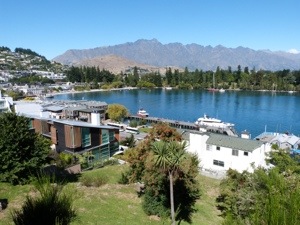
20130520-033903.jpg – view from our accommodation!

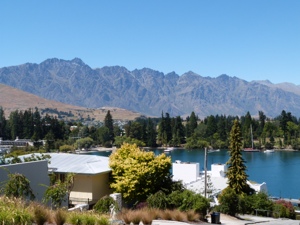
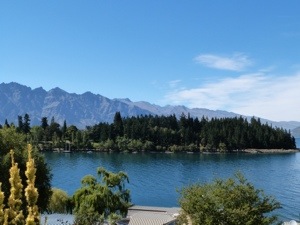
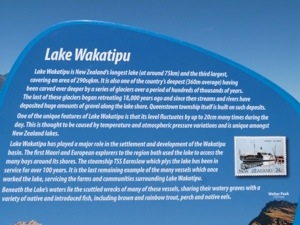
Queenstown, wow, what can we say! It blew us away …. the backpackers is high on the hillside looking down into the town and it really is spectacular. It is Waitangi Day today … and a national holiday … and the celebrations can be heard up where we are. It really is vibrant. The town is built around an inlet called Queenstown Bay on Lake Wakatipu, a long thin Z-shaped lake formed by glacial processes, and has spectacular views of nearby mountains such as The Remarkables, Cecil Peak, Walter Peak and just above the town; Ben Lomond and Queenstown Hill.

20130520-034152.jpg – our room

20130520-034234.jpg

20130520-034256.jpg

20130520-034303.jpg – remarkable Remarkables!

Queenstown is now known for its commerce-oriented tourism, especially adventure and ski tourism. A resort town, it is popular with young international, NZ and Australian travellers alike and is a centre for adventure tourism. Having a reputation for being the ‘Adventure Capital of the World’ with a vibrant nightlife scene, popular activities during the day include skiing and snowboarding, jet boating, whitewater rafting, bungy jumping, mountain biking, skateboarding, tramping, paragliding, sky diving and fishing.

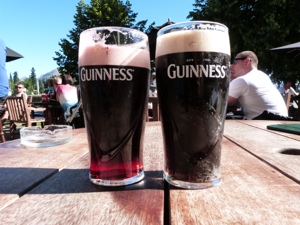
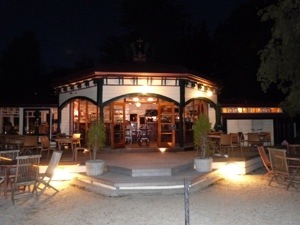
We soak up the holiday atmosphere on our walk around and it’s not long before we discover the Irish Pub, Póg Mahones 😀 and we soon settle ourselves at a table outside in this beautiful lakefront location and soak up some more stunning alpine scenery. Built in 1998, it quickly became a Queenstown icon. The Kiwi & Irish owners had the pub designed and built in Ireland itself, then shipped, lock, stock & barrel, to NZ. We are soon relaxing with a couple of pints of cold Guinness and a rewarding meal – steaks on a hot stone! Heaven after the meals of the last 4 days.

20130520-034515.jpg

20130520-034525.jpg

20130520-034532.jpg

Once the sun has gone down we walk further along the bay and stop for refreshment at the Bathhouse Tapas Bar and Restaurant – another place with a little bit of history attached to it ! The restaurant is housed in an original victorian bathhouse built in 1911 – now a bustling cafe restaurant, The Bathhouse is a far cry from its original incarnation to commemorate the coronation of King George V. It began as a fashionable bathhouse, complete with changing stalls, jetty and diving platforms but was later abandoned, vandalised and flooded to become derelict. Threatened with demolition in the 1980s, the structure was eventually saved, renovated and reborn as an architects’ studio and then a restaurant. By the late 70s, the building was dilapidated and needed major restoration. The council had planned to demolish it in 1988 but the Department of Conservation and the Historic Places Trust replaced rotten timber.

It is here that we peruse the many leaflets we picked up earlier, and form a plan of action for the next couple of days. We are not going to fill the days with activities, we are just going to soak up the atmosphere here, relax and take our time in finalising the details of our itinerary for the coming weeks and make the most of the backpackers’ location on the hillside. Another walk back to the wharf and we return to Póg Mahones for a night cap and some live music. Then it’s off home to crash for much needed zzzzzz’s. That in itself was a luxury – a double bed in our own room – bliss !

Thu, 7th Feb: Backpackers: Decco, Queenstown
We wake up late this morning at 10.00am. Everything seems to have caught up with us so we spend the rest of the morning chilling out in the lounge area and make use of the free internet which is very good here.

Neil heads off to drop the hire car off at the airport and I arrange to meet him at Flights Direct at mid-day. Once a the airport though he is told that there is a place in the town where he could have returned the car to !!! Not amused, Neil returns to Queenstown with the car – a wasted hour! I meet him at Flights Direct and we go through our plans for the next few weeks and leave the information with them so that they can put something in place for us. We arrange to return later that afternoon to see what they have come up with.

Neil really really really wants to go fishing … he has been wanting to for a while now but we haven’t had the time! Therefore we call into the wharf and book him on a 4hr fishing trip on the lake in the morning and head to Skyline Queenstown!

20130520-035630.jpg

20130520-035644.jpg

20130520-035655.jpg

20130520-041244.jpg

20130520-035707.jpg

20130520-041013.jpg

Bungee

20130520-040041.jpg

20130520-040608.jpg

Views

20130520-035935.jpg

20130520-035945.jpg

20130520-035951.jpg

20130520-040026.jpg

20130520-040032.jpg

20130520-041408.jpg

20130520-041414.jpg

20130520-041419.jpg

Toboggan

20130520-040051.jpg

A KFC and a fishing trip booking later and we return to Flights Direct who have a perfect itinerary for us and we sign on the dotted line! YAY, Singapore, Malaysia, Thailand here we come, lol. Nervous and excited much 😀

Back at Decco, we while away the evening by having a good session catching up with folk back home via facetime and skype.

Fri, 8th Feb: Backpackers: Decco, Queenstown
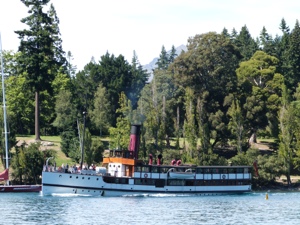
Neil goes off fishing this morning whilst I continue to make use of the quality free internet here. I have a good chat with Mum before catching up with the blog before walking into the town to pick up our itinerary and e-tickets from Flights Direct 🙂 I then head off to meet Neil from his fishing trip and am eager to see how he has done. As I sit on the jetty, I see the 100 year old coal fired steamship; the TSS Earnslaw, which provides tourist trips on the lake. It is a lovely vessel but the mucky smoke it spews out is not attractive – definitely an example of a 100 year old smoker!!!!!

20130520-035307.jpg

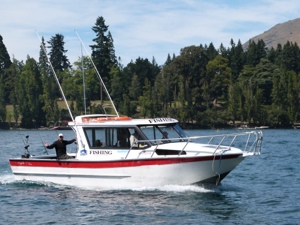
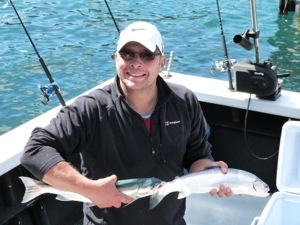
Neil’s boat pulls in and he’s had a good morning 😀 After sailing out on a 30min drive to the mouth of the river they set about fishing. Neil has caught two rainbow trouts (about 3lbs each) and, as he is going to eat them, the skipper kills and fillets the fish for him. There is a restaurant on the wharf called ‘Pub Wharf’ which, for $15 will prepare and cook the fish and serve it with salad and chips. We are hungry and it is lunchtime so we go straight over and hand the fish over.

20130520-034859.jpg

20130520-034906.jpg

20130520-034920.jpg

20130520-034928.jpg

20130520-040320.jpg
Neil says it was amazing, so fresh – from lake to plate in 4 hours!!!! The restaurant prepares the second trout for him and we take this back to the hostel to cook tomorrow.

Sat, 9th Feb: Kiwi Airport Hotel, Auckland
We wake and pack and check out at 10.00am. As our flight is not until this afternoon, we spend a few hours back in the lounge where I use the internet to load as many pictures as I can onto the blog – something I haven’t been able to do for ages as the internet has not been good enough. Neil cooks and shares his second trout with a guy from Brazil – a chef no less – before we head off to the airport for the first of our two flights to Cairns.

Check in and boarding go very smoothly as do the flight and the onward shuttle to the Airport Motel. Arriving at 7.00pm we are here only for a few hours as we need to be up at 4.00am to return to the airport for our onward flight to Cairns! It’s a bit of a luxury for us, lol – we have our own bathroom and even have a tv, pmsl!!! We shower, tuck into a very nice takeaway curry from the Motel Restaurant and lie on the bed watching tv (told you!!! a luxury!!!) before drifting off to sleep for the last time in this amazing country.

New Zealand … the South Island …

Sun, 27th Jan: Backpackers: Jailhouse, Addington, Christchurch, South Island
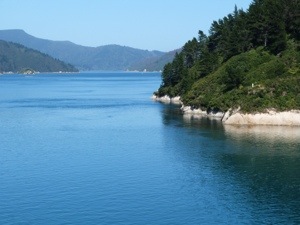
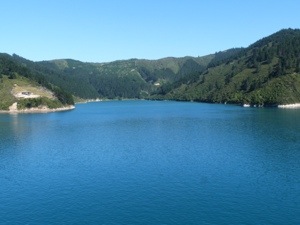
An epic day of travel today to the South Island but, oh, what a journey it is – by ferry to Picton in the South Island and TranzAlpine Coastal Pacific Train to Christchurch. We are blessed with a beautiful clear sunny day on which to travel and this rewards us with stunning views all along.

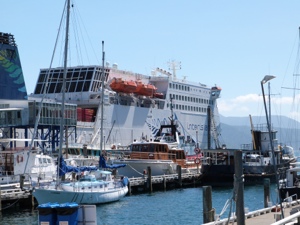
The first leg of our journey is the 3hr ferry crossing from North Island to South. Connecting Wellington and Picton by sea, the Interislander ‘Kaitaki’ has been described as one of the most beautiful cruises in the world.
20130316-211722.jpg20130316-211742.jpg20130316-211801.jpg20130316-211814.jpg

We sail out of the picturesque harbour of Wellington across the Cook Strait through to the stunning Marlborough Sounds of the South Island – a journey totalling 92km. The Cook Strait, known to Maori as Raukawa, was named by Captain Cook but visited earlier by Abel Tasman (who mistook it for an inlet) in 1642 – it’s narrowest part is 22km wide.
20130316-212021.jpg20130316-212043.jpg20130316-212100.jpg20130316-212134.jpg
We arrive in Picton, a maze of forest fringed waterways and idyllic seaside town which is our gateway to the South Island.
20130316-211508.jpg
20130316-212547.jpg
20130316-212317.jpg
20130316-212329.jpg
20130316-213817.jpg
20130316-213835.jpg
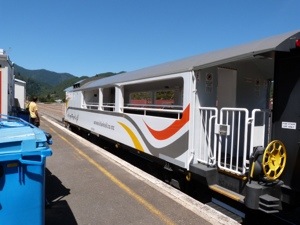
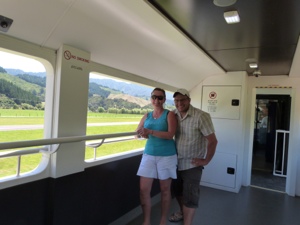
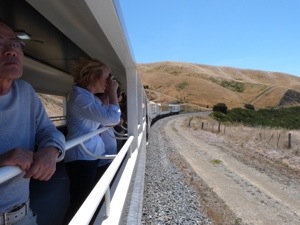
We walk through the quaint little town to the platform that is the railway station, lol, to meet our train. It’s an absolutely first class, beautiful train with huge windows and an open air viewing carriage at the front. We find our seats and are delighted with the standard, the leg room and the overall service. This is definitely the way to travel :D.
20130316-212735.jpg20130316-212743.jpg20130316-212808.jpg20130316-212849.jpg
Our journey along the edge of the world, allows us to sit comfortably and explore one of the most rugged yet accessible corners of New Zealand’s scenic South Island. Settled in our seats we arm ourselves with headphones for the commentary at particular points of interest on the way.
20130316-213102.jpg20130316-213121.jpg20130316-213129.jpg
High up on the track as we leave Picton we are at eye level with a bird of prey soaring in the sky – out of these huge clear windows you feel as though you are soaring with it ! Amazing.

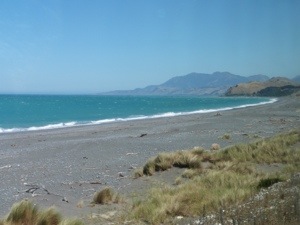
Our train journey today travels alongside the lonely Pacific Ocean coastline, where a roaring, windblown sea meets enormous bush-clad hills and the steeply rising Kaikoura Ranges. It is here that we are immersed in the sheer drama of the special landscape and where the majestic alps meet the rugged coastal scenery.
20130316-220455.jpg20130316-220521.jpg20130316-220543.jpg
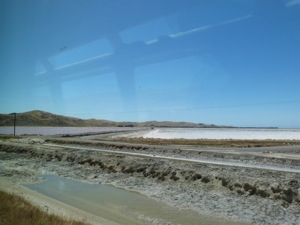
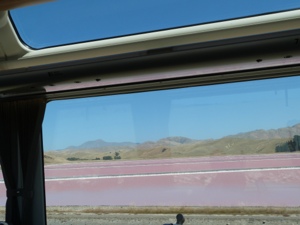
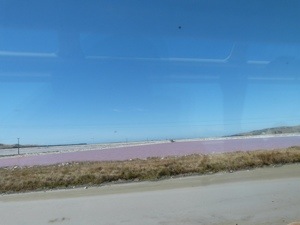
Near Blenheim, the train rolls through sundrenched vineyards and wineries and we pass the salt fields of Lake Grassmere. Passing at exactly the right time the ponds have turned a beautiful pink due to the temperature and the naturally occurring algae.
20130316-223235.jpg20130316-223243.jpg
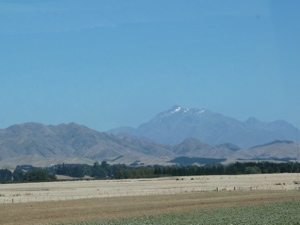
Travelling over Clarence River, the 9th longest in NZ, to the right of us on this clear day is a great view of the 2880-metre peak of Tapuae-o-Uenuku, the highest peak in the Kaikoura Ranges and we learn that Sir Edmund Hillary climbed this peak in his training for the climb of Everest.
20130316-223436.jpg20130316-223448.jpg20130316-223457.jpg20130316-223518.jpg
As we travel astonishingly close to the surging Pacific we see surfers braving the surf and, looking carefully, we see the colony of NZ Fur Seals frolicking and basking on the rocks. Crossing beautiful rivers, we see more spectacular scenery where they have carved out gorges through the hills.
20130316-224006.jpg20130316-224025.jpg20130316-224053.jpg20130316-224015.jpg
At Claverley we leave the Pacific behind and, in Canterbury, sweep inland over broad braided rivers – having crossed 175 bridges in just one journey. The rich patchwork farms of the Canterbury Plains, the largest flat expanse of land in NZ, make for a vastly different landscape to the rest of the journey. There was lots to take in so all we had to do was relax and take a load off as we ventured through NZ’s coastal scenery arriving in Christchurch just over 5 hours later.

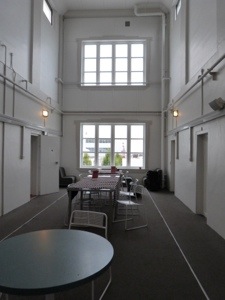
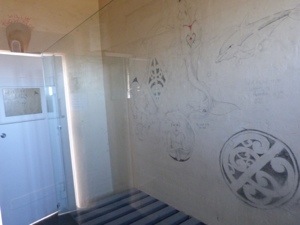
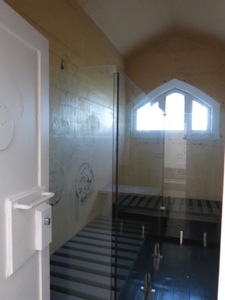
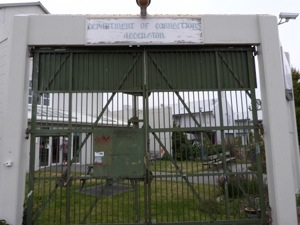
Once at the station, we make our way directly to Annandale to check in to the Jailhouse at Christchurch. This truly unique backpackers accommodation is ace – we literally are staying in a jail!! – a top pick accommodation in Christchurch.
20130316-224812.jpg20130316-224824.jpg20130316-224846.jpg20130316-224900.jpg
The renovated heritage accommodation has had a colourful history as the Addington Prison. Built in 1874 it is an important example of Gothic Revival architecture. Constructed out of 60cm thick concrete, a relatively new material at the time, the building has survived and is in pristine condition. When opened, the building catered for the needs of both sentenced and remand prisoners. Over the years it has been used as a jail, women’s prison and military camp. The Mountfort cell block and remaining perimeter walls are scheduled as a protected item for historical and architectural reasons. Room 20 has also been left untouched since the last prisoner was held here.
20130316-225053.jpg20130316-225102.jpg20130316-225209.jpg
Christchurch is NZ’s second largest city and gateway to the South Island, bordered by hills and the Pacific Ocean, it is situated on the edge of the Canterbury Plains that stretch to the Southern Alps. Renowned as the Garden City, it boasts a number of beautiful parks and gardens, tree-lined boulevards, the meandering Avon River and the delightful Botanic Gardens and Hagley Park. The City is still flourishing despite being damaged by a major earthquake in 2011. After travelling all day, we didn’t actually explore Christchurch itself but stayed in Addington, freshened up and had a chinky take out with a dvd – The Fellowship of the Ring !!!!!!!
20130316-225355.jpg20130316-225411.jpg20130316-225422.jpg20130316-225430.jpg
20130316-225802.jpg20130316-225808.jpg

Mon, 28th Jan: Backpackers: Ivory Towers, Fox Glacier
25 years ago, the historic passenger train between Christchurch and Greymouth was given a new name and a new purpose – to bring some of the world’s most breath-taking scenery to visitors and it does not fail us! A quarter of a century later, the TranzAlpine is still going strong and we look forward to stepping aboard for what is rated as one of the world’s great train journeys.

Out past the suburban bungalows of Christchurch, the TranzAlpine travels through patchwork farms of the Canterbury Plains. With the Southern Alps on one side of us, we cross the broad braids of the ice-fed Waimakariri River, which means ‘cold water’ in Maori.
20130316-225949.jpg20130316-225959.jpg20130316-230013.jpg20130316-230036.jpg20130316-230026.jpg
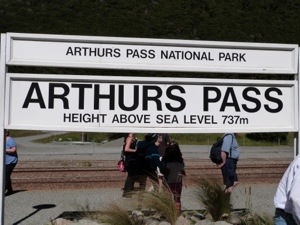
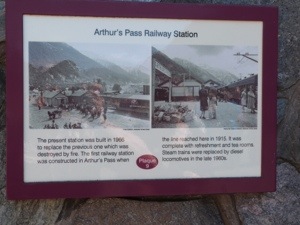
Traversing the mighty Southern Alps with spectacular views of the chiselled alpine landscape we venture to Arthur’s Pass – the South Island’s highest settlement where the National Park is a mecca for nature lovers. It’s not long before we are rolling through the striking landscapes used as locations in The Lord of the Rings and The Lion, the Witch, and the Wardrobe. Between the Alps and the West Coast we are shrouded in sub-tropical rainforest. Out in the viewing carriage Neil is in his element taking photographs of the magnificence that surrounds us. Quite literally, it takes our breath away.
20130316-234118.jpg20130316-234136.jpg20130316-234156.jpg20130316-234227.jpg20130316-234248.jpg20130316-234305.jpg
After an amazing 4 hours, we descend through thick stands of native beech to the West Coast and our destination, Greymouth – proud and quaint riverside town which was the epicentre of NZ’s gold rush back in the 1860’s, pick up our rental car and take off to explore this unspoiled region with its mighty glaciers and wild rivers.
20130316-234736.jpg20130316-234743.jpg20130316-234756.jpg20130316-234806.jpg20130316-234817.jpg20130316-234831.jpg

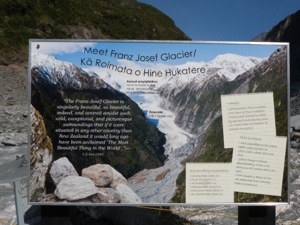
En route to Fox we stop off at the Franz Josef Glacier and even though this glacier is closed to hiking due to its instability, we managed to find a walk across the river bed to its base. Taking just over and hour we were, once again, rewarded with stunning views and photographic opportunities.
20130316-235023.jpg20130316-235039.jpg20130316-235058.jpg20130316-235110.jpg20130316-235135.jpg20130316-235147.jpg20130316-235205.jpg20130316-235232.jpg20130316-235253.jpg20130316-235308.jpg
20130317-003935.jpg20130317-003946.jpg
Once at Fox, we checked in to Ivory Towers in the heart of Glacier country and close to beautiful Lake Matheson. Fox Glacier is nestled under the mighty Southern Alps and Ivory Towers is the closest hostel to the Copland Pass and Welcome Flat Hot Pools. We are very pleased with the location and go off to explore.

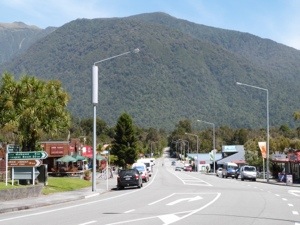
We immediately fall in love with the township which is small, charming and retains a peaceful country town feel. In fact, when you arrive at Fox Glacier you immediately feel relaxed in its intimate, village atmosphere.
20130317-001841.jpg20130317-001900.jpg20130317-001911.jpg20130317-001930.jpg
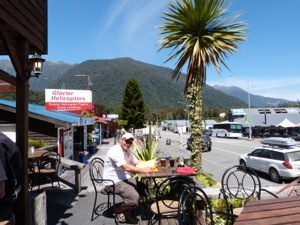
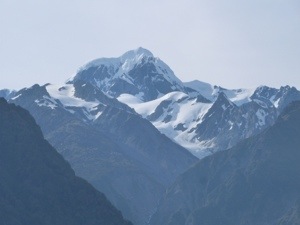
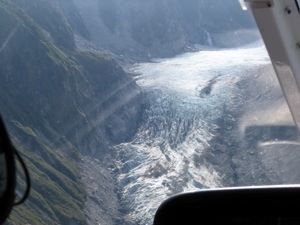
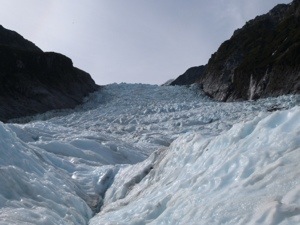
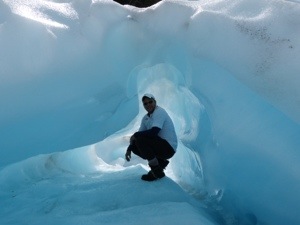
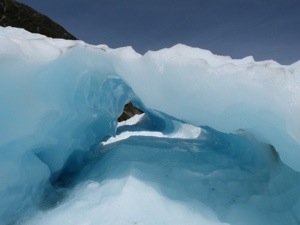
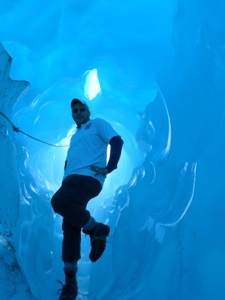
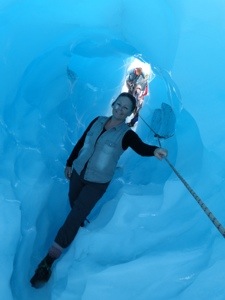
It has a stunning outlook across surrounding farms and offers breathtaking views of New Zealand’s highest peaks Aoraki (Mt Cook) and Mt Tasman. Tucked discreetly into the rainforest-clad foothills of the Southern Alps, the town was founded when gold was discovered. Complimenting the charm of this delightful country village are nine licensed restaurants and cafes. The Fox Glacier General Store and Fox Glacier Motors also offer passing travellers a good variety of food and other conveniences. Once in the high street, we seek out the base for our Heli-Hike which combines the thrill of two helicopter flights, with the opportunity to explore a remote and pristine part of the glacier on foot with our knowledgeable guide. Glacial forces are greatest in this area and often create spectacular ice caves, arches and tunnels, brilliantly blue in colour.

The unique combination of climate and shape means that Fox (and Franz Josef) Glaciers move at approximately 10 times the speed of other valley glaciers around the world. At Fox Glacier this is due to the funnel-like shape of the glacial valley and the huge neve, the snow accumulation area, at the top of the glacier. Fox Glacier’s neve is 30 sqkm, bigger than the whole of Christchurch City!

It is difficult to appreciate how truly massive Fox Glacier is. At 13kms (reaching a height of 2,800m) Fox Glacier is the longest of the awe-inspiring New Zealand West Coast glaciers. At its head, soaring peaks of over 3,000m dominate the vista. These include Aoraki (Mt Cook) and Mt Tasman. This mighty moving river of ice falls 2,600m on its journey from the base of the Southern Alps to the West Coast.

New Zealand’s West Coast glaciers are unique and probably the most accessible glaciers in the world, as they terminate amongst temperate rainforest just 2250m above sea level. So special is this mountain environment, that it forms part of the South Westland World Heritage Area.

Before heading back to Ivory Towers, we treat ourselves to a gorgeous meal at one of the four restaurants in the town, The Last Kitchen. Then it’s one more drink at the Backpackers next door and we head off ‘home’ for our early start tomorrow.

Tue, 29th Jan: Backpackers: Ivory Towers, Fox Glacier, South Island & the Heli-Hike!
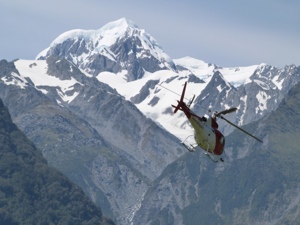
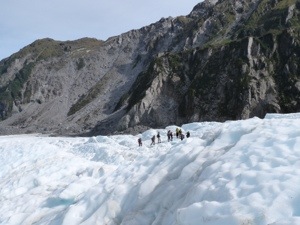
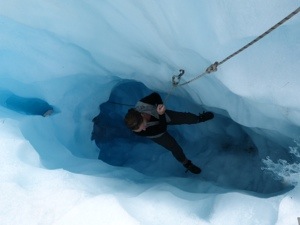
We awake this morning very excited for our visit to the glacier today. The fly-in, fly-out Heli-hike combines the excitement of walking on the Fox Glacier with the thrill of helicopter flights. By flying in we are able to access and explore a part of the glacier where its forces work hardest and often create spectacular ice caves and arches.

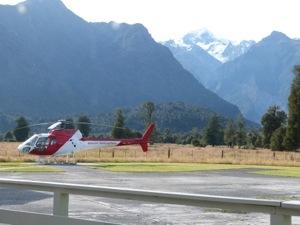
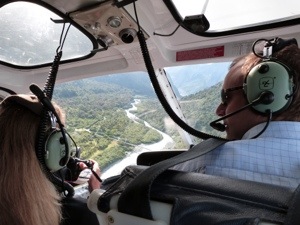
Equipped with sturdy leather boots and other equipment, we board the helicopter for our first flight over the pinnacles of the lower icefall where the ice is in constant motion. We then circle the upper icefall and Victoria Falls before landing.
20130317-002152.jpg20130317-002212.jpg20130317-002229.jpg20130317-002241.jpg20130317-002256.jpg20130317-002320.jpg
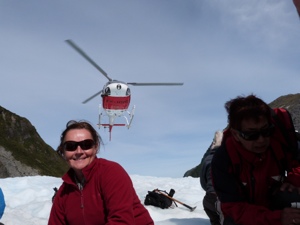
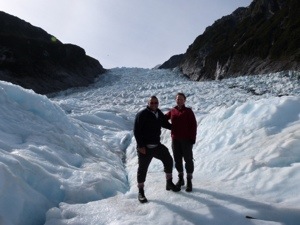
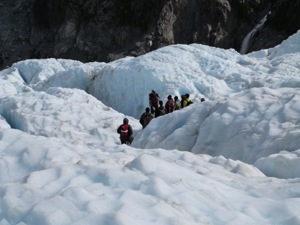
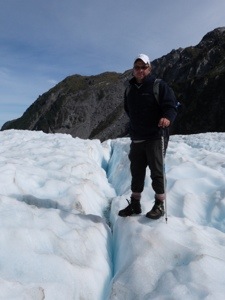
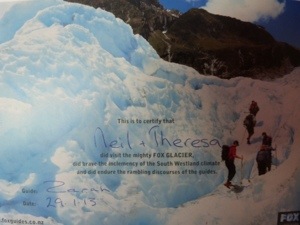
The landing site on the ice is a remote and exceptionally beautiful part of the glacier. At this stage, our guide (Zara) issues us with our crampons, specially designed for these ice conditions and we follow the ice steps she cuts out with her axe and explore the amazing formations and ice caves which are only seen here.
20130317-004127.jpg
20130317-002513.jpg20130317-002522.jpg20130317-002538.jpg20130317-002550.jpg20130317-002607.jpg20130317-002630.jpg20130317-002707.jpg20130317-002725.jpg20130317-002735.jpg20130317-002755.jpg20130317-002808.jpg20130317-002830.jpg20130317-002844.jpg
It really is a true voyage of exploration and, as there are so many changing features, the guides always find something new.
20130317-003026.jpg20130317-003046.jpg20130317-003103.jpg20130317-003119.jpg

Overwhelmed by our experience this morning we decide to reflect on it by taking some time out at Cook Saddle Cafe and Saloon. On the Main Street in the sunshine, the atmosphere is so relaxing. Feeling quite high on emotion, we decide to stay in this beautiful part of the world and book another nights stay at Ivory Towers.
20130317-003415.jpg20130317-003431.jpg20130317-003439.jpg20130317-003449.jpg
Taking our time now, we tuck into a huge spareribs and chicken wrap at the Saloon before relaxing in the hot tub, freshening up, having a beans on toast supper and slipping contentedly into bed. 😀 happy, happy, happy days.

Wed, 30th Jan: Backpackers: Mountain View, Wanaka
Having been entranced by the dramatic scenery of the North which we absolutely loved, we are becoming overwhelmed by the sheer beauty of the South and our 3hr drive to Wanaka far exceeds our expectations. En route we stop for lunch at a Department of Conservation Camp at Cameron Flat – WOW! Overlooking the Makarora River ….. you’d be hard pushed to lunch anywhere better!
20130317-010111.jpg20130317-010121.jpg20130406-114024.jpg20130406-114116.jpg

The beauty of driving around by yourselves is that you can just park up literally anywhere that takes your fancy! This was exactly the scenario as we pulled out of Cameron Flat. After this beautiful stopover we pull into a car park 330m further up the road to walk to the Blue Pools. The pools are the result of the Blue River and Makarora River meeting and derive their name from their distinct blue colour. This is due to light refraction on the clear, snow fed, icy cold water running from the mountain. The 30 minute walk to the pools was via a gravelled path giving easy walking through a silver beech forest to a viewing platform. From here we are on top of the crystal-clear pools and it’s not long before we join the other people in dipping into the icy cold water. Neil more than me!!! It’s soooooo freezing but invigorating at the same time and the heat of the day is welcome as you step out of the water – amazing.
20130406-115514.jpg20130406-115525.jpg20130406-115541.jpg20130406-115551.jpg20130406-115603.jpg

It’s not long before our journey takes us to the head of the remarkable overwhelmingly stunning Wanaka Lake OMG! and the road from Haast to Wanaka via the Haast Pass is marvellous as we head into a wonderful scenic area travelling through the Haast Pass to the West Coast.
20130406-121641.jpg20130406-121658.jpg

Driving through the Haast Pass is stunning and the road follows an ancient trail used by Maori travelling to the West Coast in search of pounamu/greenstone/jade/nephrite. The name for the trail is Tiora-patea, meaning “The way is clear”. The Haast Pass is the lowest across the Main Divide (563 metres above sea level).

After crossing the Clutha River and driving along flat to undulating country we meet with Lake Hawea – OMG! Different to Lake Wanaka, the beaches and the gently sloping shoreline were drowned by the raising of the lake, so it has a different appearance. The colour of the water in the lake is an instant attraction for photographers. The vivid blue results from the depth of the water – 410 metres (1,345 feet).
20130406-121712.jpg20130406-121734.jpg

The road then follows the shore of Lake Hawea to the Neck, a narrow strip of land separating Lakes Wanaka and Hawea. The road drops to lake level before rising over the Neck, and then follows the shores of Lake Wanaka. Wanaka itself breathtaking … it is a town in the Otago region of the South Island and is situated at the southern end of Lake Wanaka, adjacent to the outflow of the lake to the Clutha River. It is also the gateway to Mount Aspiring National Park which, in December 1990, was given World Heritage status. Primarily a resort town Wanaka has both summer and winter seasons is based around the many outdoor opportunities which are very evident as we drive around.
20130406-122637.jpg20130406-122650.jpg20130406-122657.jpg20130406-122712.jpg20130406-122719.jpg20130406-122726.jpg20130406-122735.jpg

We stay at Mountain View Backpackers, centrally located with a large sunny garden for relaxation and we decide to stay another day so we can chill out here as it is so beautiful

Thu, 31st Jan: Backpackers: Mountain View, Wanaka
We choose an extremely lazy day today – we breakfast whilst watching the rest of The Fellowship of the Ring before whiling away the day.

After ringing around for our accommodation over the next few days, Neil heads off down the road (literally) to sort out some bits and pieces – a visit to vodafone, a haircut, a visit to the travel agents and some small purchases. I stay at Mountainview to use the internet to catch up on blogging amongst other things. The glorious afternoon pulls us out for another walk around the town and, whilst doing so, we bump into Mike and Michelle. We shared a table with them on our TranzAlpine journey a couple of days ago, with Mike and Neil out in the viewing carriage most of the time! We shared a beverage or two with them – well it would be rude not to – before heading back to the backpackers for the evening.
20130406-122946.jpg20130406-123003.jpg20130406-123020.jpg20130406-123028.jpg

Fri, 1st Feb: Backpackers: Te Anau Lakefront Hostel, Fiordlands
Awake bright and early we commence our journey to Te Anau via the Tourist Drive and it blows us away. We really are struggling to find the words to convey just how gorgeous it is.
20130406-123448.jpg20130406-123454.jpg20130406-123502.jpg

It’s not long before we are driving through the ski fields of Cardrona where the Harrier Hawks (or Kahu – NZ’s most common bird of prey) are somersaulting through the air – whether they are fighting or mating we do not know, but they are stunning. It is a common sight in the sky all over NZ. Its most common food these days seems to be roadkill so many die in collisions with traffic. Although they are wonderful fliers they are very slow in taking off and often cannot avoid oncoming traffic. The drive today is totally different to yesterday; part of an ever-changing scenery, we head through the hills and it’s almost claustrophobic as they get closer and closer to the sides of the road.

Changing again, the road soon opens up with the mountainous Crown Range prominent in the distance. We have a MUST STOP at the breathtaking scenic lookout here overlooking the valley before dropping down steeply on a multi hairpin road to the bottom in the Lake Hayes Region.
20130406-123635.jpg20130406-123648.jpg20130406-123659.jpg

Once through Frankton we journey alongside the dramatic Remarkables Range to the left of us – all around us now are mountains and hills all patch-worked in a multiple of colours. If this isn’t enough, we then have the gorgeous Lake Wakatipu to the right of us.
20130406-123825.jpg20130406-123819.jpg20130406-123838.jpg20130406-123850.jpg20130406-123857.jpg20130406-123904.jpg

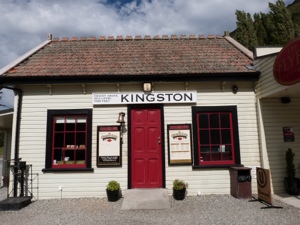
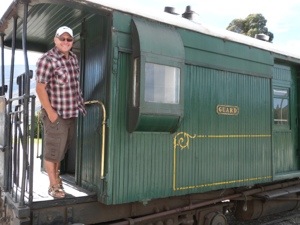
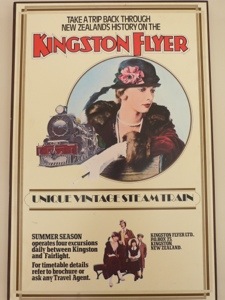
At Kingston we have a coffee and scone break at the cafe of the Kingston Flyer; NZ’s famous vintage steam train, on the southern shores of Lake Wakatipu and 40mins south of Queenstown.
20130406-124650.jpg20130406-124657.jpg20130406-124704.jpg

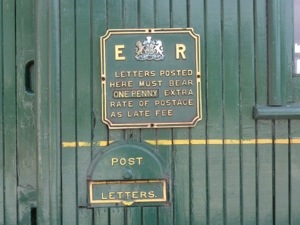
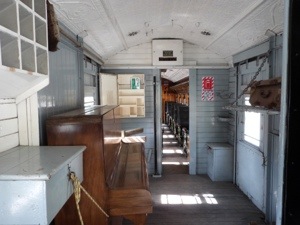
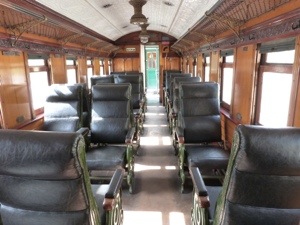
As the weather is so hot and dry at the moment this old steam train timetable has been temporarily suspended due to the risk of fire. A bonus for us as we were able to climb onto the carriages and have a relaxed walk around the beautiful carriages. The Train is made up of two steam locomotives and seven wooden carriages, seating 226 passengers. It features a turn of the century buffet carriage and an authentically restored 1898 ‘birdcage’ compartment carriage, with luxurious leather upholstered seats.
20130406-124013.jpg20130406-124022.jpg20130406-124030.jpg20130406-124056.jpg20130406-124116.jpg20130406-124140.jpg20130406-124210.jpg20130406-124230.jpg20130406-124251.jpg

The original Kingston Flyer was a passenger service that operated between Kingston and the Main South Line at Gore from 1878 through to the mid 1950s. It provided a passageway to Queenstown and the surrounding stations, by meeting up with the lake paddle steamers at Kingston Wharf. Today The Kingston Flyer operates on a 14km stretch of track and consists of:
Two AB Pacific Class steam locomotives (NZ built)
AB 795 dating 1927 was a former Royal Train Locomotive
AB 778 dating 1925 and seven steam-heated wooden vintage carriages dating back to 1898.

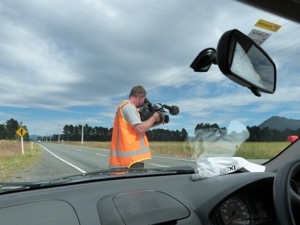
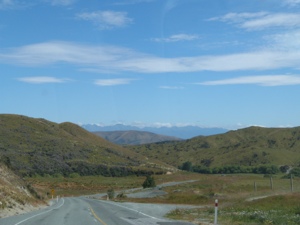
As we journey on leaving Kingston behind, we are surrounded in all directions by hills hills hills. Coming out of Garston we pass Stu’s (apparently) World Famous Fishing Shop. The scenery opens up into flat farmland – where there are deer which is a nice change to all the sheep – with views of marvellous ranges in the distance. Once on the Heritage Trail to Te Anau the road opens up and so does Neil’s speed level 😀 and we get done for speeding!!!!!!! 117k in a 100k zone – Neil is very dismayed but every cloud and all that, we are filmed for NZ Highway Cops, pmsl. Anything to get his face back on the tv, lol.
20130406-124942.jpg20130406-124953.jpg20130406-124948.jpg

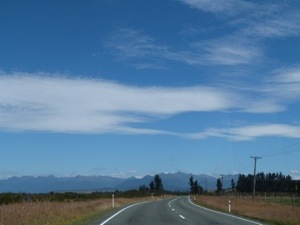
It’s not long before we bypass Mavora Lakes and the Red Tussock Conservation Area which is so in contrast to the magnificent Manapouri Range of mountains in the distance. Fiordland National Park and Te Anau welcome us in glorious sunshine and it is a sight to behold.
20130406-125257.jpg20130406-125303.jpg20130406-125323.jpg20130406-125334.jpg20130406-125341.jpg20130406-125359.jpg

We are delighted to check into Te Anau’s only backpackers located on the lakefront, a stones throw from Lake Te Anau. Te Anau is central to all of NZ’s most famous scenic beauties, and within 2 hours you can be inspired by the sheer forces of nature. We have chosen to do this in Doubtful Sound by means of a cruise (Saturday) and in doing the 4 day tramp on the Kepler Great Walk starting on Sunday!
20130406-125734.jpg20130406-125742.jpg20130406-125748.jpg20130406-125759.jpg20130406-125808.jpg20130406-125815.jpg

We take our evening walk around the town and head to the cinema for the 7.00pm showing of Ata Whenua – Shadowland. Fiordland on Film where you literally become ‘part of the scenery’. Filmed by award winning cinematographers, with outstanding musical composition in surround sound. Ata Whenua – Shadowland brings you the Fiordland World Heritage Status Wilderness you would otherwise never see. Mysterious, evocative, exhilerating and utterly spectacular. Filmed across extremes of season, climate and terrain, it takes you on an unforgettable journey through the most awe inspiring landscapes on earth. It really is an outstanding production of 32mins and makes the hairs on your arms stand up!
20130406-130417.jpg – a photo of a photo! Stunning!

Sat, 2nd Feb: Backpackers: Te Anau Lakefront Hostel, Fiordlands
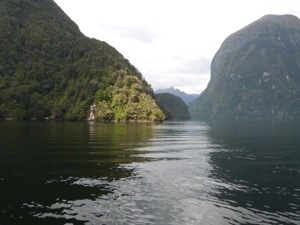
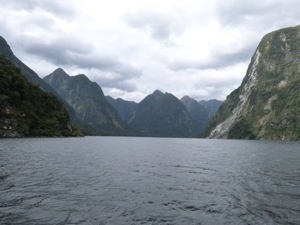
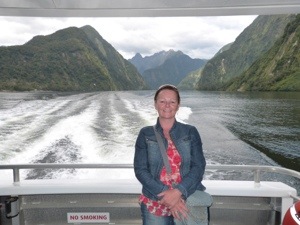
Today, we immerse ourselves in the vast and untouched wilderness of Doubtful Sound, the second largest fiord in Fiordland National Park.

Getting to Doubtful Sound is an adventure in itself. With no direct road access, the only way we can to get there is by a cruise across Lake Manapouri and a coach trip over Wilmot Pass – a 22km road; the most expensive in NZ @ $2 per cm (4.4million total!). This isolation makes the fiord a very special place. On our drive we come to a lookout just before we make the steep descent to the Wharf and it’s stupendous overlooking the start of the Doubtful 😀
20130406-131622.jpg20130406-131701.jpg20130406-131711.jpg20130406-131750.jpg20130406-131803.jpg20130406-131848.jpg20130406-131856.jpg20130406-131924.jpg20130406-131936.jpg20130406-131945.jpg

We are very fortunate today as our guide tells us that in Doubtful it rains every two out of three days! The vegetation of fern beech trees and moss is very dense all around us. During the drive over Wilmot Pass, NZ wood pigeons (Kereru) are also flitting about and our guide informs us that they can be quite comical as they get drunk on Puriri Berries which are their favourite food. A Weka also crosses our path, a flightless sturdy brown bird, about the size of a chicken.

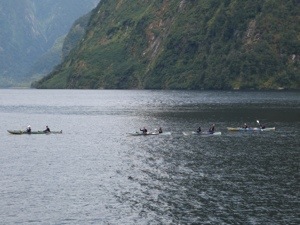
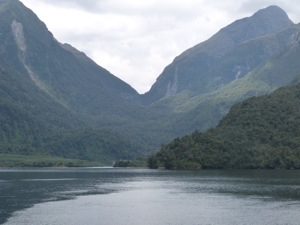
With its rugged peaks, verdant rainforest and twisting, hidden inlets, Doubtful Sound takes your breath away.
20130406-135349.jpg20130406-135426.jpg20130406-135435.jpg20130406-135525.jpg20130406-135539.jpg20130406-135608.jpg – the only building in the Doubtful, this fishing hut was built ‘on the water’ highlighting a loophole in the law. As it is not actually on the land, there was nothing that could be done to prevent it being built!
20130406-135700.jpg

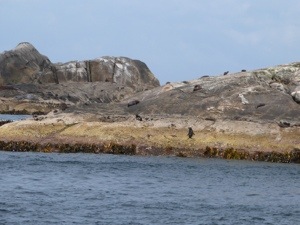
Home to abundant wildlife such as fur seals (we see a colony at the mouth of the Doubtful sunbathing and frolicking in the water), the Little Blue Penguin and the rare Fiordland Crested Penguin – one of NZ rarest mainland penguins. The bottle nose dolphins also found here form a small resident population living at one of the southern most locations in the world for this species. We cruise as far as the Tasman Sea where the fur seal colony is and where we spot an albatross on the horizon.
20130406-135730.jpg20130406-135743.jpg20130406-135737.jpg

It is here that the boat turns around to explore some of the hidden inlets on our way back to the underground power station. At one such inlet, the boat’s engine is turned off and we are requested to turn off mobile phones and cameras and to stay silent for a couple of minutes. It is a really surreal experience – one that cannot be explained! It is so still and so remote resulting in a really unique feeling. Will we ever experience such solitude again? I don’t think so, it was a great couple of minutes – just priceless!
20130406-141318.jpg20130406-141326.jpg20130406-141331.jpg20130406-141337.jpg20130406-141354.jpg

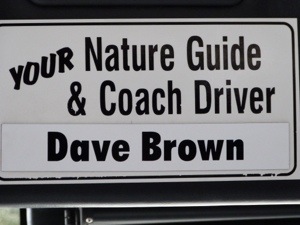
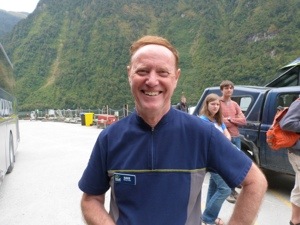
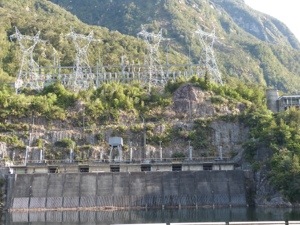
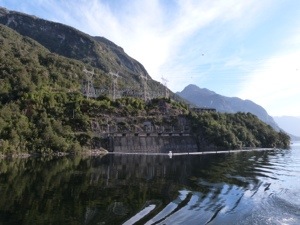
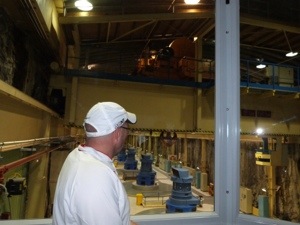
Soon, we are met off our boat by Dave (who reminds us of home 🙂 sorry Dave! lol) who is our guide to NZ’s largest hydroelectric power station, the Manapouri Underground Power Station, located deep beneath the Fiordland. The construction of this power station was one of NZ’s greatest engineering achievements, with the majority of the work completed underground in a remote location. The only external signs are the above-ground control building, a switchyard and two sets of transmission lines that loop across the head of the lake on their way to join the national grid.
20130406-151138.jpg
20130406-143939.jpg20130406-144007.jpg
20130406-131815.jpg20130406-131824.jpg
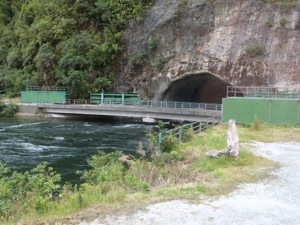
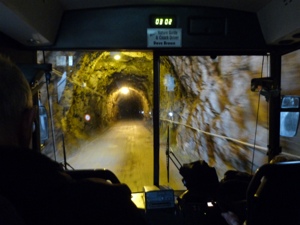
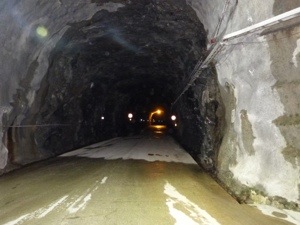
Our guide asks for permission to enter the tunnel after which we travel by coach down a 2km (1.2 miles) spiral tunnel to view the immense underground machine hall and learn the story behind this amazing power station and its construction which, including building the road, took over 8 years!
20130406-152358.jpg
20130406-151511.jpg
20130406-151518.jpg
20130406-151546.jpg
20130406-151627.jpg

A return cruise over Lake Manapouri and we head back to Te Anau to prepare for our Great Walk which starts tomorrow. We have booked into the huts along the way which are remote and we in the wilderness – no leccy, gas or Internet!!!!! We have to carry with us our own cooking equipment, food for 4 days, sleeping bags, toiletries and clothing, lol. This should be fun!

New Zealand … the North Island …

New Zealand … the North Island …

Mon, 14th – Wed, 16th Jan: Quest on Eden, Auckland, New Zealand
Kia Ora ‘Welcome’
Well, we are on our own now – the first 4 months of our trip is over and the itinerary exhausted! We head to New Zealand aware that we need to take some time out to prepare our own itinerary and it is in Auckland where we spend time preparing our trip around the islands.

Our flight out of Australia is a learning curve!!!!! We are not allowed to enter New Zealand until we have a return flight booked. The Travel Agent sold us our flight to New Zealand without saying a word about this and it is very frustrating indeed. Mindful of our impending flight we have no alternative but to head over to Flight Direct to book a return ticket – not the most cost effective way of doing things. After venting our frustration and with our return ticket in our hands, we finally get to check in!

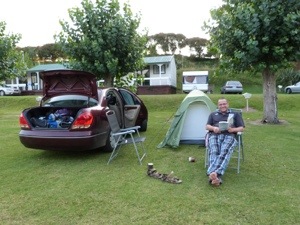
Once in Auckland, we are pleased with our self contained unit at Quest on Eden – our 3 days here will be enough to regroup and plan. Superbly located in the City, we also find a great location in which to make our plans – Britomart Country Club. An open air pub/restaurant with a great atmosphere and lovely staff many of whom show an interest in our trip. We are able to pick their brains about where to and where not to go in the time available to us. Free wifi is also an attraction and on more than one occasion we spread our maps and booklets all over the table here to make our plans. By the end of Tuesday evening we have an itinerary forming and some reservations made, YAY! Oh yeh, we’ve purchased a small tent as well and looking forward to a no frills camping trip.

On Wednesday afternoon, we join the Harbour Cruise to cruise around Auckland’s beautiful Waitemata Harbour. This experience also gives us a free return ticket to Devonport. A fascinating commentary from the crew takes us past Bean Rock Lighthouse at the entrance to Waitemata Harbour. This historic lighthouse was built in 1871 and its small hexagonal cottage provided accommodation for one lightkeeper. The light became automatic in 1912 and the iconic design now appears on a New Zealand beer brand. The next stop is Rangitoto Island; an island which erupted from the sea in a series of dramatic explosion about 600 years ago and is now dormant. The summit offers spectacular 360 degree views of Auckland and the islands of the Hauraki Gulf. The next point of interest is North Head, Devonport. North Head guards the entrance to the harbour and for this reason was made into an artillery battery in 1885 to defend Auckland from invasion. It has many interesting gun emplacements and tunnels to explore, not to mention great walks and views of the harbour. We then cruise past Devonport Naval Base which dates back to 1840 when William Hobson, then Governor of New Zealand, arrived on the HMS Herald and established Auckland as New Zealand’s short lived capital. Today it is an important administrative centre for the Royal New Zealand Navy.

The cruise then does a loop under Auckland Harbour Bridge which opened in 1959 after taking over 200 workers nearly 4 years to build. It originally had only 4 traffic lanes and traffic increased so much that a further 2 lanes were added later on each side. It is here we stop for a few minutes to watch somebody bungy jumping off the underside of the bridge.

Chelsea Sugar Refinery is the next point of interest on the cruise. Chelsea Sugar, one of New Zealand’s iconic food brands, has been producing sugar at this refinery in Birkenhead since 1884. Today the company produces 2000,00 tonnes of raw sugar each year. The factory is situated in a beautiful privately owned park which is open to the public. The last port of call is Westhaven Marina and the Viaduct. The largest marina in the Southern Hemisphere, Westhaven can accommodate up to 1800 boats ranging in sizes up to 28m. Nearby, the Viaduct Marina is home to many bars and restaurants as well as the Voyager New Zealand Maritime Museum and many superyachts. It is in the Marina that we stop for a couple of drinks looking over our maps and doing some further research for our travels around these islands. Before we know it, time has got the better of us and we decide to use our free return ticket to Devonport and have our dinner over there. Devonport, one of Auckland’s most historic suburbs is just 12 minutes across the harbour. The marine village of Devonport boasts pretty Victorian villas, sandy beaches, stylish shops and charming cafes and it is at one of these cafes that we settle for our dinner.

We have a lovely evening but, unfortunately, on our way back to the ferry I end up ‘on the floor’. I just walk off the end of some steps and stumble head first into the pavement in front of me and it hurts!!!!!!!!!!!! My shins take the immediate brunt of the fall and bruise and swell immediately bringing tears to my eyes. Once back in Auckland they are so painful and Neil ‘my Samaritan’ spends the next hour or so alternating ice compresses on them. Not the ideal way to spend our last night in Auckland 😦

Thu, 17th Jan: Orengo Holiday Park, Russell, Bay of Islands
We are picked up today at 8.30am pick by the rental car company. I am a ‘bit worse for wear’ this morning – my body is aching and in pain following last night’s fall. My back and neck are stiffening and my right hand, arm and shoulder are complaining. After completing the paperwork at the car hire company, I feel very concerned and we make the decision to call into Auckland Hospital to ‘get checked out’. After a very thorough investigation and feeling confident that I haven’t done any major damage, we head off to join the Twin Discovery Road, a tourist road along the North Island which today will take us to the Bay of Islands in the ‘Northland’ region. The scenery is just splendid, so vast and never ending.
20130223-135423.jpg

20130223-135503.jpg

20130223-135539.jpg

We finally arrive in Paihia, a bustling seaside town right in the heart of the Bay of Islands. Recognised as ‘the Jewel of the Bay of Islands’ it is a place where the local people enjoy a great lifestyle. There are superb golden sand beaches, scenic walks to explore, and a wide range of recreational activities which allow you to explore the 144 islands that make up the Bay of Islands. The town is rich in its history and culture which we later explore in nearby Waitangi – a place where Maori and European residents mix with visitors from all around the world.

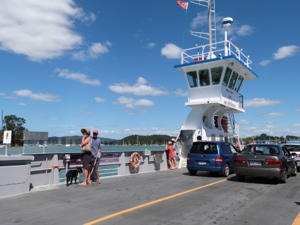
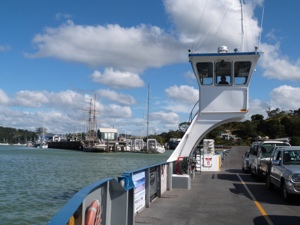
We call into Tourist Information and decide to base ourselves in ‘Romantic’ Russell. We head off to Opua to get the ferry to Russell and seek out Orongo Bay Holiday Park. As my back and neck are so uncomfortable, we decide to put off using the tent for a couple of days and book into a basic no frills hut. Set in 14 acres of park like grounds and native bush, this park offers the quintessential ‘Kiwi’ camping experience. The Russell peninsula is a kiwi and weka protection zone and native bird life abounds within the park.
20130223-133414.jpg

20130223-133424.jpg

20130223-133446.jpg

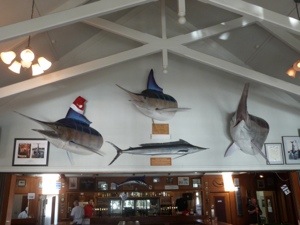
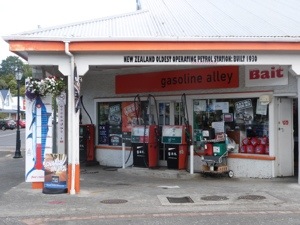
Once settled in we drive into Russell and immediately fall in love with the place. We come across the oldest garage in use in New Zealand before taking a drink at the Bay of Islands Swordfish Club where there are amazing castings of ‘trophy’ fish which have been caught over the years; namely a Broadbill @ 700lbs and a 1017lbs Blue Marlin. Newspaper clippings and trophies adorn the walls for huge records achieved when fishing in the area.
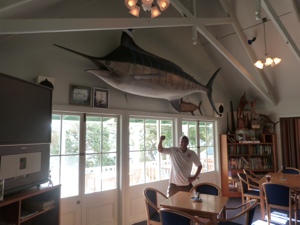
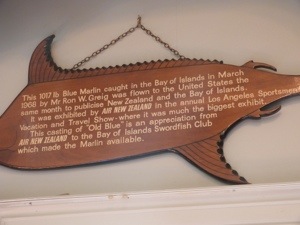
20130223-133823.jpg

20130223-133841.jpg

20130223-133850.jpg

It’s late when we decide to head back so we opt for a curry at the local Thai Restaurant before heading ‘home’ to our basic kiwi camp experience!

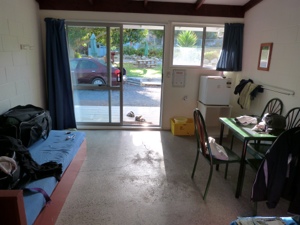
20130223-134047.jpg

20130223-141436.jpg

Fri, 18th Jan: Orongo Bay Holiday Park, Russell, Bay of Islands
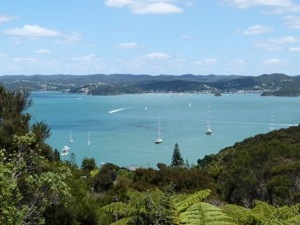
We head back into the quaint village of Russell today to explore some more. Only 1.5km from the park sparkling waters, pohutukawa-fringed bays and a colourful history epitomise this romantic Bay of Islands township. Russell was a focal point for both Maori and European settlement and went through some notorious times in its early days. During the 1800s it was know as the Hell Hole of the Pacific with a population of ship deserters, ex-convicts, whalers, sealers and ship girls, an image totally at odds with its current peaceful charm.

Its background is reflected in historic buildings such as Pompallier House, New Zealand’s oldest surviving catholic building, and Christ Church, the country’s oldest working surviving church. The church facade still has bullet holes dating from conflicts between local Maori and European settlers and Russell Museum tells you more.
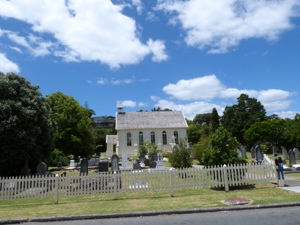
20130223-134237.jpg

20130223-134247.jpg

20130223-134305.jpg

20130223-134315.jpg

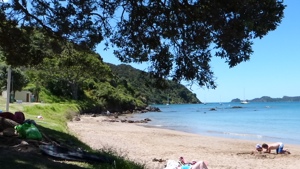
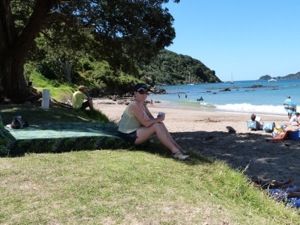
Today, Russell is renowned as a base for big game fishing excursions and cruises around the Bay of Islands. Behind the town, we visit Flagstaff (Maiki) Hill which offers stunning views of the area. We then make a stop at nearby Long Beach which caters for those seeking sand and surf. It is here that we fall madly in love with the Bay of Islands … it is ‘that place’ … and we spend a lovely couple of hours here totally engaged in our surroundings.
20130223-134620.jpg

20130223-134639.jpg

20130223-134649.jpg

20130223-134713.jpg

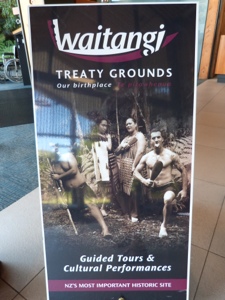
Our final stop of the day is Waitangi Treaty Grounds on the Waitangi National Trust Estate

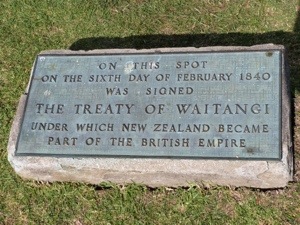
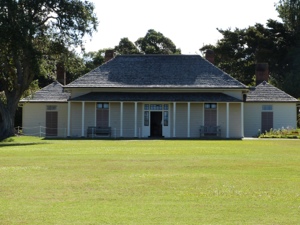
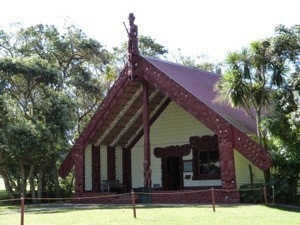
The Waitangi Treaty Grounds, overlooking the Bay of Islands, is New Zealand’s pre-eminent historic site. It was here on February 6th, 1840, that the Treaty of Waitangi was first signed between Maori and the British Crown. The Treaty Grounds are part of the 506 hectare Waitangi National Trust estate, which was gifted to the nation by Lord and Lady Bledisloe in 1932. In the Deed of Gift, Lord Bledisloe stipulated that the estate was never to be a burden on the tax payer, and as such it is not government funded. The estate is administered by the Waitangi National Trust Board, whose members represent various sections of New Zealand people.
20130223-140002.jpg

20130223-140022.jpg

20130223-140035.jpg

20130223-140048.jpg

It was a very interesting ‘history’ lesson and, following a film introducing the events that took place before, during and after the signing of the Treaty of Waitangi in 1840, we explore the features of the Treaty Grounds including:-
The Treaty House – built for the first British Resident, James Busby and his family. It is one of New Zealand’s oldest and most visited historic homes.
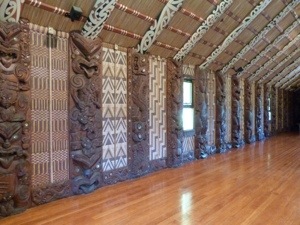
Te Whare Runanga – fully carved Maori Meeting House, which is representative of all Iwi (regional tribes) in New Zealand.
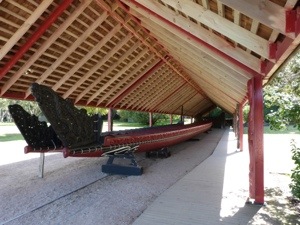
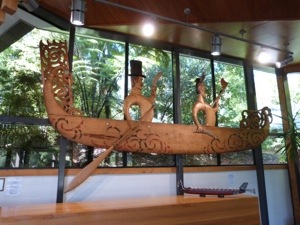
Ngatokimatawhaorua – one of the world’s largest Maori ceremonial war canoes.
The imposing Naval flagstaff – which marks the place where the Treaty of Waitangi was first signed.
20130223-134922.jpg

20130223-134948.jpg

20130223-135025.jpg

20130223-135049.jpg

20130223-135113.jpg

20130223-135130.jpg

20130223-135156.jpg

The extensive park-like grounds with stunning sea views of the Bay of Islands, have an abundant native bird life, heritage gardens, trees, and a mangrove boardwalk which make for a beautiful walk. We head off for a highly recommended peek of Haruru Falls before making our way back to the holiday park.
20130223-141022.jpg

20130223-141042.jpg

20130223-141100.jpg

Sat, 19th Jan: Opal Hot Springs Holiday Park, Matamata (Hobbit Country)
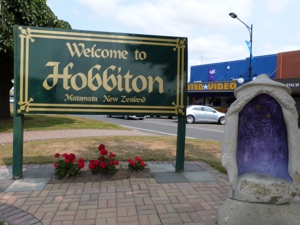
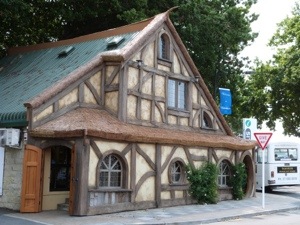
We have a long long journey ahead of us today. We get on the road early for the 6 hour drive back through Auckland for our night in Matamata (the maori word for ‘Headland’) – Hobbit Country! Hobbiton might have put it on the world map, but this bustling rural town nestled at the bottom of the dramatic Kaimai Range has an outstanding reputation in its own right. The wide streets of this pretty town are lined with trees, restaurants, bars and boutique style shopping and surrounded by lush green pastures.
20130223-140358.jpg

20130223-140416.jpg

20130223-140438.jpg

20130223-140450.jpg

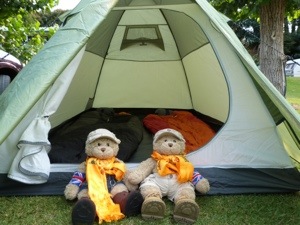
We do a bit of shopping in the town before heading to the park where, for the very first time, we set up our tent, lol, and it goes amazingly well!

20130223-140724.jpg

20130223-140739.jpg

20130223-140757.jpg

20130223-140805.jpg

20130223-140814.jpg

We have a great tea cooked in the camp kitchen before relaxing in the natural hot mineral (37 degrees) pool. After chilling out for the remainder of the evening we hit the tent for a game of Trivial Pursuit and some much needed Zzzzzz’s.

Sun, 20th Jan: Cosy Cottage Thermal Holiday Park, Rotorua, Central North Island
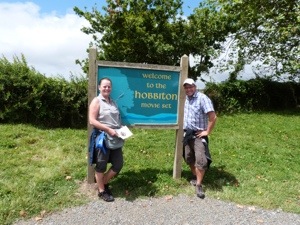
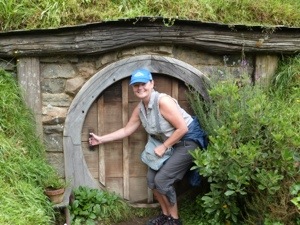
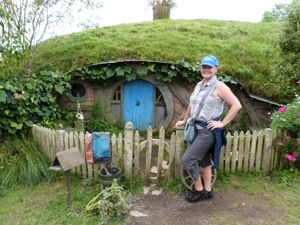
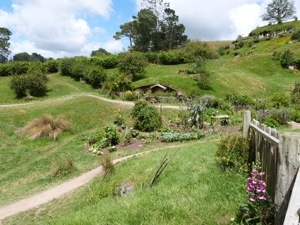
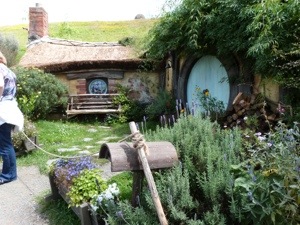
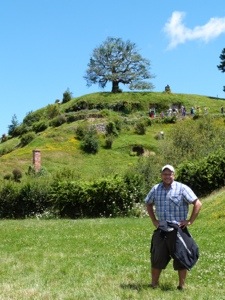
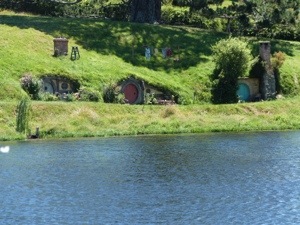
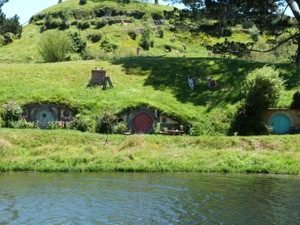
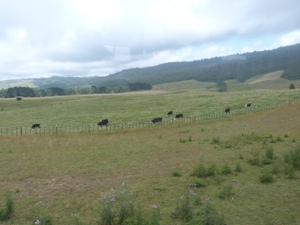
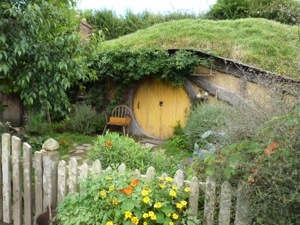
Today, en route to Rotorua, we discover the real Middle-earth on the most picturesque private farmland near Matamata in the North Island of New Zealand, where we visit the Hobbiton Movie Set from The Lord of the Rings and The Hobbit film trilogy in a fascinating two-hour guided tour.

There are also spectacular views across to the Kaimai Ranges from the rolling green hills of the movie set, which is still the working sheep and beef farm of the Alexander family. In September 1998 Peter Jackson and New Line Cinema discovered the farm during an aerial search for suitable film sites. This farm closely resembled that of Middle-earth as described by Tolkien. The large established pine tree, later to become known as the ‘party tree’ was already perfectly placed in front of the lake. The surrounding rolling farmland was untouched by 20th Century clutter such as roads, buildings or power lines.
20130223-141836.jpg

20130223-141906.jpg

20130223-141926.jpg

20130223-141951.jpg

20130223-142003.jpg

Assisted by the New Zealand Army, the total site construction took 9 months, including building 1.5km of road to the site. At its filming peak, 400 people were on site including Peter Jackson, Gandalf (Sir Ian McKellen), Frodo (Elijah Wood), Bilbo Baggins (Ian Holm) and Sam (Sean Astin).

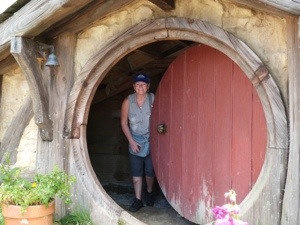
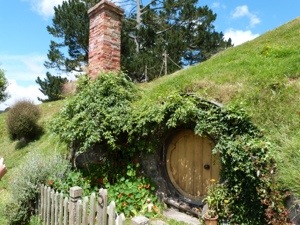
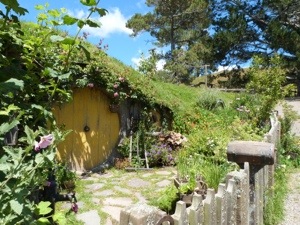
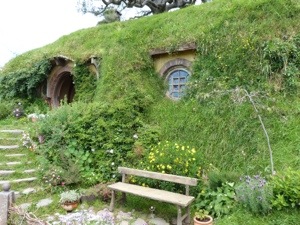
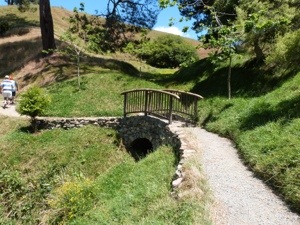
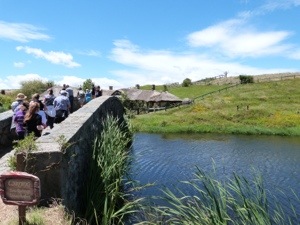
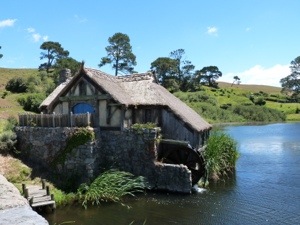
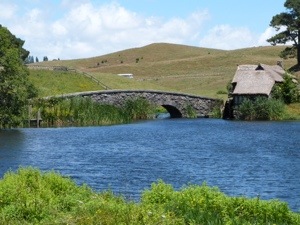
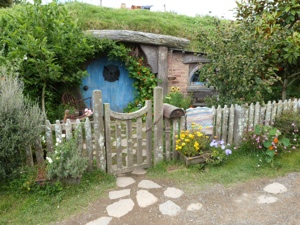
The set has now been completely rebuilt and can be seen as it appeared in the films and it is soooo cute. We learn the tricks of the trade in setting up this filmset of 37 hobbit holes – including the cutting down of the Oak Tree overlooking Bag End which was cut down and brought in from near Matamata. Each branch was numbered and chopped, then transported and bolted together on top of Bag End – all 26 tonne of it. I, for one, am quite excited as we venture around The Shire and see the lane where Gandalf arrives, Bag End, Sam’s house, the Party Tree and Field, the Mill and Arch Bridge.

20130223-142511.jpg

20130223-142528.jpg

20130223-142539.jpg

20130223-142555.jpg

20130223-142633.jpg

20130223-142646.jpg

20130223-142654.jpg

20130223-142718.jpg

20130223-142743.jpg

20130223-142756.jpg

20130223-142816.jpg

20130223-142838.jpg

20130223-142901.jpg

20130223-143044.jpg

20130223-143543.jpg

20130223-143642.jpg

20130223-143714.jpg

20130223-143730.jpg

20130223-143746.jpg

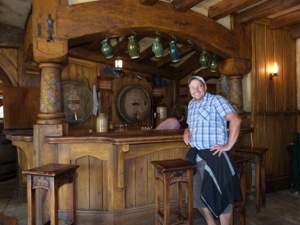
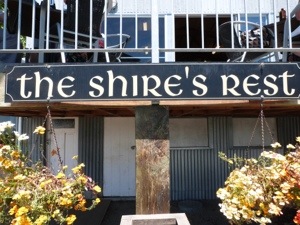
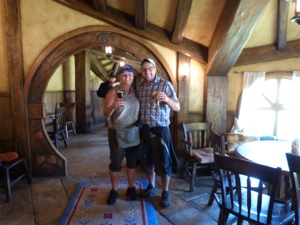
The final stop in The Shires is, of course, the pub! The Green Dragon Inn is now open and is a special feature of the tour – although the actual filming for the scenes in the movies took place at a set in Wellington. We visit the inn as part of the tour and enjoy a complimentary beer before heading off for Rotorua.
20130223-144304.jpg

20130223-144316.jpg

20130223-144332.jpg

20130223-144345.jpg

20130223-144359.jpg

20130223-144433.jpg

20130223-144444.jpg

20130223-144526.jpg

20130223-144536.jpg

20130223-144544.jpg

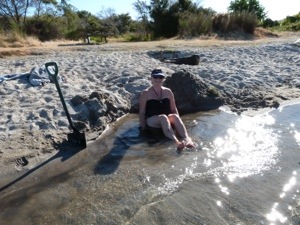
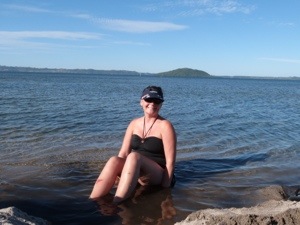
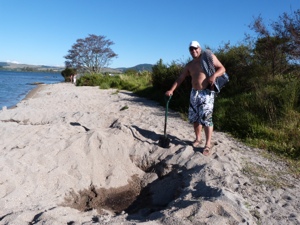
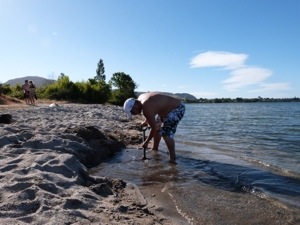
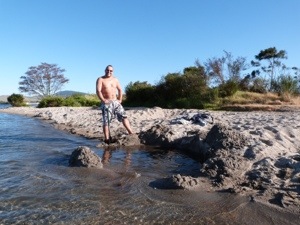
In Rotorua we take an explority drive of the area before deciding on staying at Cosy Cottage Holiday Park on the banks of the Utuhina trout stream with lakeshore access to Lake Rotorua. Located at the edge of the beautiful Lake Rotorua, the distinctive smell of sulphur in NZ’s thermal capital soon lets you know you’ve arrived. We spend a very chilled out evening indeed and once we have set up our ‘camp’ we walk the short distance to Lake Rotorua Hot Water Beach armed with a shovel – this was amazing, we dug a hole in the hot sand at the lake’s edge where the thermals heat the water and we had our very own natural spa bath – loved it!

20130223-144847.jpg

20130223-144859.jpg

20130223-145032.jpg

20130223-145042.jpg

20130223-145051.jpg

20130223-145110.jpg

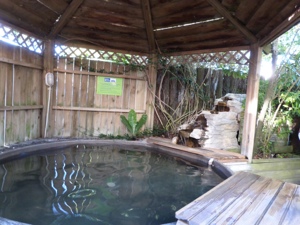
Afterwards we relaxed in one of the three therapeutic geothermal hot mineral pools before eating and drinking the night away. Bliss!
20130223-145523.jpg

Mon, 21st Jan: Cosy Cottage Thermal Holiday Park, Rotorua,Central North Island
A late morning breakfast on this sunny day was welcome before heading off to the Duck Tour in Rotorua. However, this tour was not to be as the 11.00am tour was full and the 1.00pm tour – which we ended up booking instead – had a mechanical fault and was cancelled.

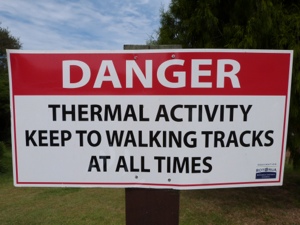
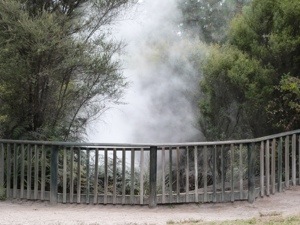
Initially ‘filling in time’ til the 1.00pm tour, we went for a walk around the local Kuirau Park at the northern end of Rotorua; a public park that is definitely alive!!!!!! with walking tracks which lead to numerous areas of vigorous geothermal activity.
20130223-145911.jpg

20130223-145925.jpg

20130223-145942.jpg

20130223-145956.jpg

20130223-150004.jpg

20130223-150020.jpg

New eruptions do occur from time to time, and only in 2001 did mud and rocks the size of footballs suddenly hurl 10 metres into the air as a new steam vent spontaneously announced its arrival. Two years later, similar eruptions provided a real bonus for delighted visitors. In early Maori times the small lake in the park was much cooler and was known as Taokahu.

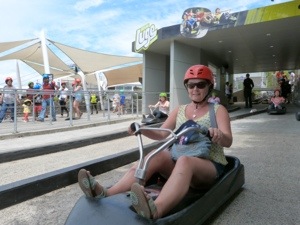
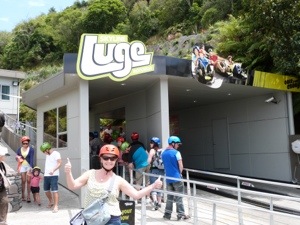
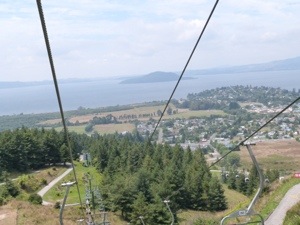
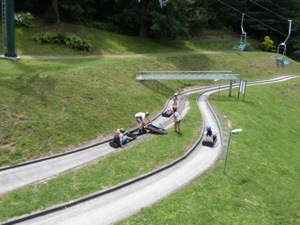
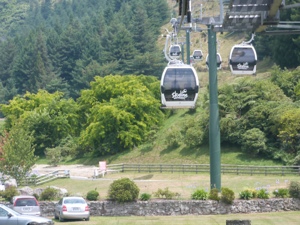
On returning to the town and learning that the 1.00pm Duck Tour was cancelled, we took ourselves off for some fun at the Skyline Luge and what fun we had, lol. Found in the heart of New Zealand’s scenic volcanic wonderland just minutes from Rotorua’s City centre, this is where the Luging adventure all began in 1985. Conveniently located high on the side of Mount Ngongotaha, is Skyline Rotorua. A Gondola carries you to 487 metres above sea level to a stunning environment providing panoramic views of Rotorua City, Lake Rotorua and the surrounding area. A 900 metre long Doppelmayr cableway system with a vertical rise of 178.5 metres, carries us to the Skyline Rotorua complex.
20130223-150403.jpg

20130223-150417.jpg

20130223-150438.jpg

20130223-150507.jpg

20130223-150539.jpg

20130223-150552.jpg

20130223-150615.jpg

20130223-150627.jpg

20130223-150647.jpg

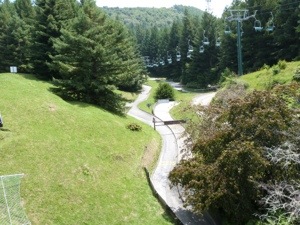
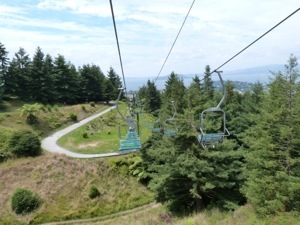
The Luge has three tracks of differing skill levels winding through beautiful forest – whether taking the gentle paced Scenic track, stepping up to the Intermediate or taking on the challenge of the Advanced, the tracks were a truly unique outdoor experience – all 4km of them! Once at the bottom, we took the scenic chairlift back to the top of the track before finally leaving the mountain on the Gondola to return to our camp in readiness for our Maori Cultural Experience in the evening – Mitai Maori Village.

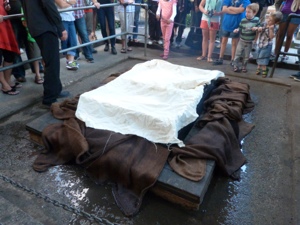
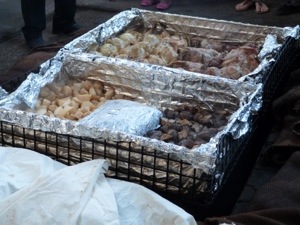
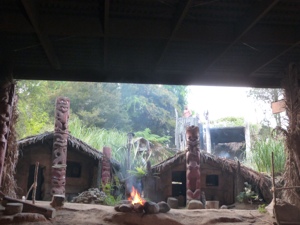
Rotorua’s long Maori history makes it an ideal place to experience the rich Maori heritage and an evening at Mitai gives us an authentic introduction to Maori culture leaving us amazed and in awe. The Mitai family ‘is proud to have created a sacred and spiritual place that offers you an indigenous cultural experience like no other’. After the welcome, ‘Kia Ora’, we are taken over to see our traditionally cooked hangi meal being lifted from the ground – lamb, chicken, vegetables all being ‘steam cooked’ by the thermals in the ground.
20130223-150930.jpg

20130223-150948.jpg

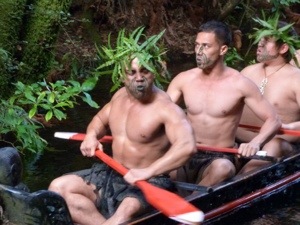
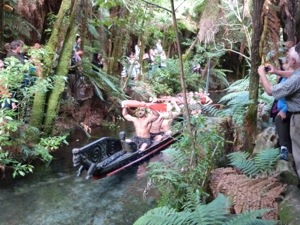
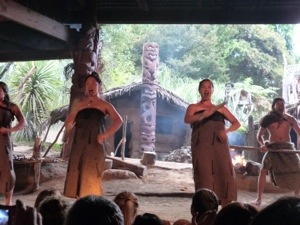
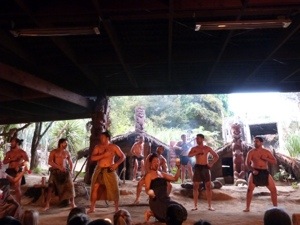
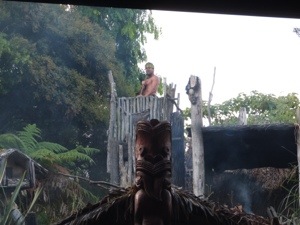
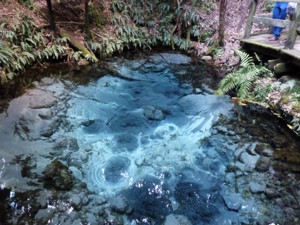
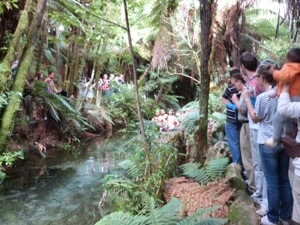
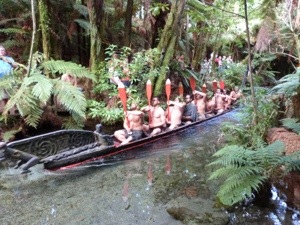
On entering the world of Mitai we are enthralled by the natural bush setting and the crystal clear water full of eels and trout, flowing directly from the earth at the sacred Fairy Spring. Following the arrival of the warriors in traditional dress who paddled an ancient warrior canoe (waka) down the Wai-o-whiro stream, we watched the cultural performance and learned about their past, their carvings and ta moko (tattoo art).
20130223-151127.jpg

20130223-151155.jpg

<a href="https://pitkinsaroundtheworld.com/wp-content/uploads/2013/02/20130223-151343.jpg”>20130223-151343.jpg
20130223-151424.jpg

20130223-151446.jpg

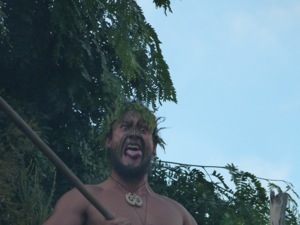
We are captivated by the displays of weaponry and combat, coupled with the grace and beauty of the ladies’ poi dance. The finale of the spine tingling haka was amazing 🙂 and so intimidating lol – you couldn’t look any one of the tribe in the eye!
20130223-151629.jpg

20130223-151659.jpg

20130223-151728.jpg

20130223-151814.jpg

20130223-151858.jpg

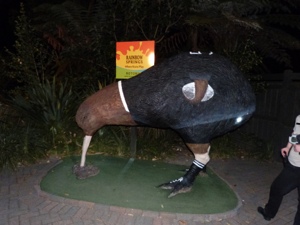
After a succulent Hangi meal, and once it was dark, we were guided back into the bush to see the glow worms (larvae of swamp flies) in their natural habitat which were beautiful to look at. We did the Rainbow Springs Night Tour ‘add-on’ – this took us on a walk with a local guide through Rainbow Springs, a National Kiwi Trust Conservation Centre set in 22 acres of spectacular flora and fauna. It is here we can see huge trout up close gliding through the cold clear water, hear the striking calls of the nocturnal birds and see nocturnal creatures that are normally hidden during the day. The main purpose of this ‘add-on’ was to get to see the ‘elusive’ kiwi and we are not disappointed – we went right inside a kiwi enclosure and got to see them up close and hear them on the forest floor foraging for bugs. A very strange creature indeed – a bird the size of a chicken but with no wings, a huge long beak and very thick set legs. Not in a rush to welcome us obviously but it was an experience having actually seen one.
20130223-152031.jpg

Tue, 22nd Jan: All Seasons Kiwi Holiday Park, Lake Taupo, Central North Island
En route to Lake Taupo today we visit Wai-O-Tapu (Sacred Waters) Geothermal Wonderland. Set in the natural bush setting, this adds another dimension to the experience. Sculptured out of volcanic activity and thousands of years in the making, Wai-O-Tapu is considered to be New Zealand’s most colourful and diverse geothermal sightseeing attraction. Here we are introduced to a uniquely different natural landscape – the key to what you see lies below the surface – one of the most extensive geothermal systems in New Zealand.
20130223-152655.jpg

The Wai-O-Tapu thermal area is part of a Scenic Reserve administered by the Department of Conservation and has the largest area of surface thermal activity of any hydrothermal system in the Taupo Volcanic Zone. Covering some 18sq.km with the volcanic dome of Maungakakaramea (Rainbow Mountain) at its northern boundary, the area is covered with collapsed craters, cold and boiling pools of mud, water and steaming fumaroles and we only get see a very small portion. The area is associated with volcanic activity dating back about 160,000 years and is located right of the edge of the largest volcanic caldera (depression) with the active Taupo Volcanic Zone.

The Wai-O-Tau stream forms and integral part of the drainage system which ultimately flows into the Waikato River and out into the Tasman Sea. Boiling springs and volcanic gases introduce numerous minerals into the water. Beneath the ground there is a system of streams which are heated by magma left over from earlier eruptions. The water is so hot (temperatures of up to 300 degrees centigrade have been recorded) that it absorbs minerals out of the rocks through which it passes and transports them to the surface as steam where they are ultimately absorbed into the ground. This so called ‘rotten egg smell’ (and it doesn’t half honk!) of geothermal areas is associated with hydrogen sulphide. The wide range of colours in the area are all natural and are due to different mineral elements, the predominant colours being:-
Green – colloidal sulphur / ferrous salts
Orange – Antimony
Purple – Manganese oxide
White – Silica
Yellow-Primrose – Sulphur
Red-Brown – Iron Oxide
Black – Sulphur and Carbon

Clearly defined tracks provided us with the opportunity to enjoy the diversity of this area through a series of different walks taking from 30 to 75 minutes or more, each with their own unique volcanic vistas to fascinate. Walking at our own pace we find innumerable colours of every tint and hue displayed in pools, lakes, craters, steam vents, mineral terraces and even in the tracks we walk on. We view a wide range of features (25 in all) which include:

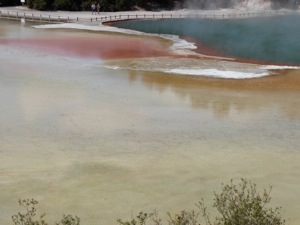
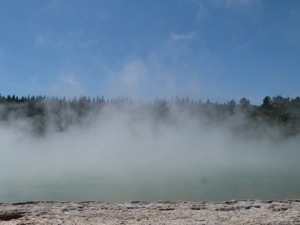
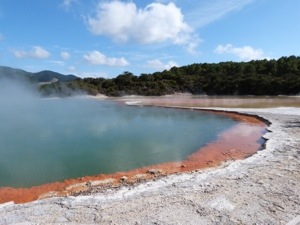
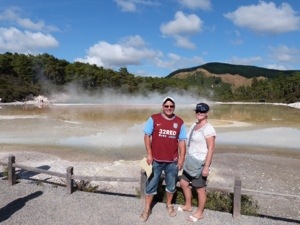
The World Famous Champagne Pool – a unique fifth of a hectare bubbling, hissing water, with a beautiful ochre-coloured petrified edge. This spring is the largest in the district being 65m in diameter and 62m deep. Its surface temperature is 74 degrees c and bubbles are due to carbon dioxide. The pool was formed 700 years ago by a hydrothermal eruption. Minerals contained in the water are gold, silver, mercury, sulphur, arsenic, thallium, antimony and are presently depositing in the surrounding sinter ledge. The various sinter ledges have been associated with tilting of the pool as a consequence of earthquake activity.

20130223-152354.jpg

20130223-152407.jpg

20130223-152423.jpg

20130223-152446.jpg

Devil’s Ink Pots – a series of mud pools whose water levels fluctuate with the amount of rainfall. The colour is due to small amounts of graphite and crude oil brought to the surface by the water forcing its way up.
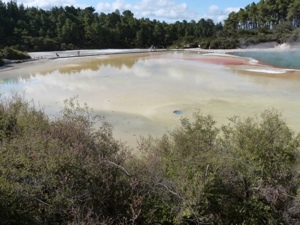
The Artist’s Palette – a panorama of hot and cold pools and steaming hissing fumeroles producing an amazing variety of ever-changing colours. Overflowing water from the Champagne Pool draws with it minerals that have originated from below the surface. To the left of the Palette is a geyser from which steam rises and water can erupt to a height of one metre.
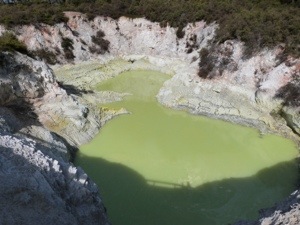
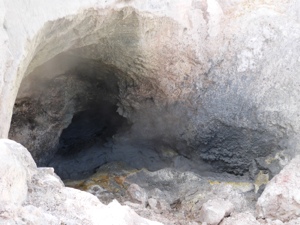
Huge Volcanic Craters – well over a dozen craters, some formed by eruptions, some by internal chasms, all displaying a variety of geothermal features. Formed over the last few hundred years these are up to 50 metres in diameter and up to 20 metres deep. Several contain hot water springs and most have extensive sulphur deposits. In Bird’s Nest Crater, starlings, swallows and mynahs nest in the holes on the walls of this collapsed crater. The heat from below rises up the crater walls to incubate the eggs.
20130223-153237.jpg

20130223-153253.jpg

20130223-153312.jpg

20130223-153347.jpg

20130223-153405.jpg

20130223-153424.jpg

20130223-153442.jpg

20130223-153504.jpg

20130223-153514.jpg

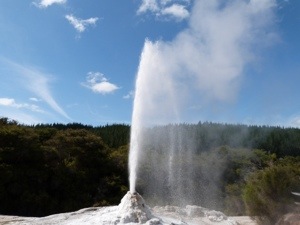
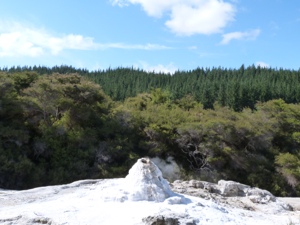
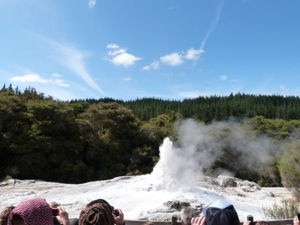
and last but not least, The Lady Knox Geyser – erupting daily reaching heights of up to 20mtrs, we experience the raw beauty and sheer power that Mother Nature offers when this ‘performs’.
20130223-153819.jpg

20130223-153841.jpg

20130223-153956.jpg

We loved it here !

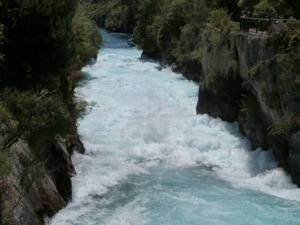
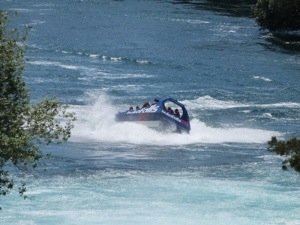
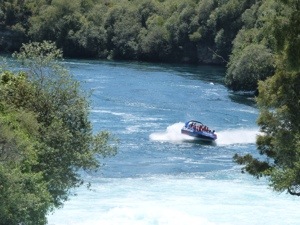
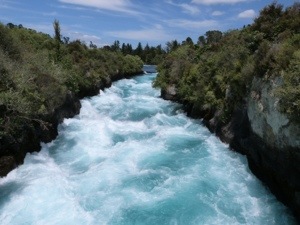
Further on our scenic drive to Taupo, we have an ice cream stop at Huka Falls and we are so glad we did. On our travels so far we have seen so many stunning and amazing places that we feel we are saying these words all the time!!! But, it IS stunning and amazing and Huka Falls is no exception – WOW! Taking hundreds of years to create, Huka Falls is one of the most visited natural attractions in New Zealand. An ancient lake once covered most of the upper Waikato River Valley. Before the Taupo Oruanui eruption 26,500 years ago thick deposits of sediments accumulated on the lake floor eventually becoming hard mineral layers, today known as Huka Formation. Over time the lake drained to become Upper Waikato River cutting a deep narrow channel through these hard layers and reaching a softer layer underneath. Eventually sections of the softer layer eroded and collapsed away leaving the water to plummet over remaining hard layers and creating the spectacular sight we see today. The colour of the water is amazing – a striking blue against the bright white of the air bubbles in the rushing water.

20130223-154308.jpg

20130223-154316.jpg

20130223-154336.jpg

20130223-154352.jpg

20130223-154405.jpg

The incredible volume of water is due to the Waikato River, 100m wide and 4m deep upstream, being forced through the carved channel of the hard rock, which is only 15m wide and 10m deep. About 220,000 litres of water plunges over the rock face of Huka Falls every second, and could fill an Olympic swimming pool in 12 seconds!!!! The Waikato River is New Zealand’s longest river, its 425km journey starting at Lake Taupo and ending at the sea south of Auckland.

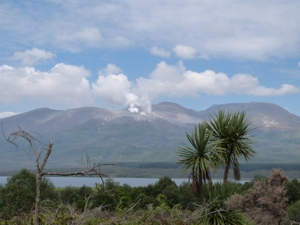
We arrive at Taupo late in the afternoon and are all travelled out! The beautiful Lake Taupo is stunning as it appears over the horizon and we learn that it is about the size of Singapore – more of an inland sea really. The home of much geo thermal activity it is the country’s largest lake as well as the stunningly clear, turquoise waterfall (Huka) and river (Waikato). Lake Taupo was created nearly two thousand years ago by a volcanic eruption so big it darkened the skies in Europe and China.
20130223-160030.jpg

20130223-160050.jpg

20130223-160059.jpg

At some of Lake Taupo’s beaches, you can enjoy warm, geothermal water currents. However, we enjoy relaxing at the site for the evening, catching up with home, laundry and generally tidying up before a lovely dinner and a nice cuppa before bed 🙂

Wed, 23rd Jan: Whakapapa Holiday Park, Mt Ruapehu, Tongariro National Park, CNI
We head off today to Tongariro National Park to prepare for our walk tomorrow. Before leaving Taupo we spend some time at a scenic lookout on the Great Lake Taupo and take in this serene beauty one last time.

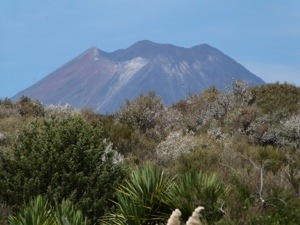
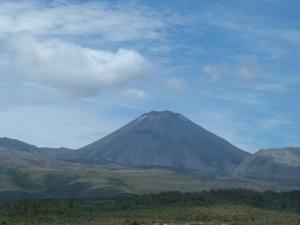
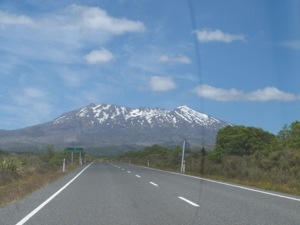
Stocking up with groceries for the next few days (including our ‘picnic’ for the great walk tomorrow!) at Turangi, we make good progress towards Whakapapa Holiday Park, where we will base ourselves for the next two days. Our journey into this volcanic area is truly spectacular and the sights are breathtaking. We see the volcanoes we will be exploring all the way into Whakapapa getting larger and larger. Mt Nguaruhoe (Mt Doom in the Lord of the Rings Trilogy) appears and it is so prominent and dominant in the skyline.
20130223-162657.jpg

20130223-162704.jpg

20130223-162717.jpg

20130223-162822.jpg

On checking in, we book our tickets with Roam who will pick us up at 7.00am in the morning to take us to Mangatepopo Car Park (1100m), the start of our walk of the Tongariro Alpine Crossing.

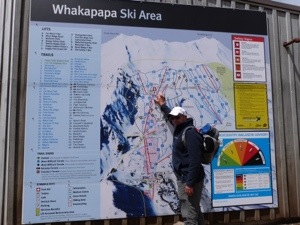
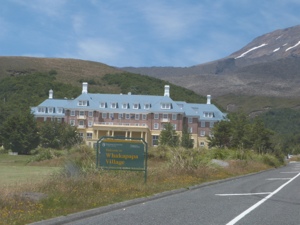
After settling in, we explore the tiny Whakapapa Village and take off up to the upper slopes, and also home of Whakapapa Ski Area, of Mt Ruapehui – New Zealand’s largest volcano. A 20min journey on 2 chair lifts takes us up across the volcanic landscape to Knoll Ridge Cafe, New Zealand’s highest cafe at 2020m where we walk some of the Skyline Walk and play in the snow! We have arrived too late to do the full walk and be back in time for the last chair lift 😦 The full 2hr round trip takes you to Skyline Ridge (2,300m) where the views across Tongariro National Park and beyond are said to be breathtaking. However, it has to be said that the views we had anyway were also stunning.
20130223-162044.jpg

20130223-162054.jpg

20130223-162102.jpg

20130223-162112.jpg

20130223-162133.jpg

20130223-162154.jpg

20130223-162205.jpg

20130223-162244.jpg

20130223-162308.jpg

20130223-162318.jpg

The Lord of the Rings, Mordor the strong hold of the dark lord Sauron was filmed on and around this Volcanic Plateau. Much of Frodo and Sam’s journey into the land of Sauron was filmed here and our views across to Mt Doom (real name Mt Ngauruhoe) are spectacular!

We have loved our first few hours in this area so much and both agree that we would have loved a good 5 days walking holiday here. Oh well, can’t have it all!!!!

Thu, 24th Jan: Whakapapa Holiday Park, Mt Ruapehu, Tongariro National Park, CNI
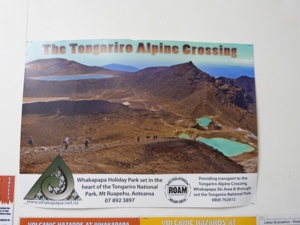
Up extremely early today (6.00am) to do the Tongariro Alpine Crossing heralded as the best one-day trek available in New Zealand (from alpine meadow to mountain summit with stunning volcanic features along the way), while others say it ranks among the top ten single-day treks in the world. Set in New Zealand’s oldest national park and a dual World Heritage Site, The Tongariro National Park is rich in both cultural identity and dramatic, awe-inspiring natural scenery. Unique landforms, including the volcanic peaks of Ngauruhoe (2287m) Tongariro (1967m) and Ruapehu (2797m) ensure the Tongariro Alpine Crossing is considered a world-renowned trek.
20130223-163532.jpg

20130223-163547.jpg

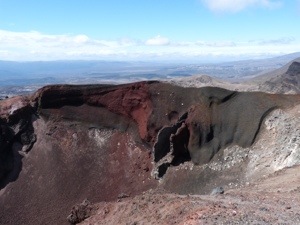
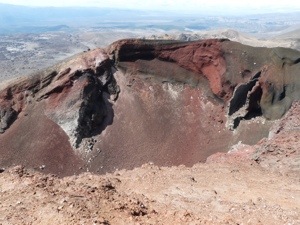
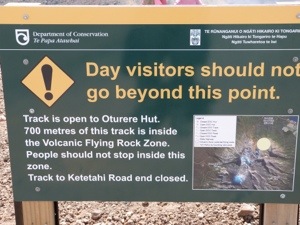
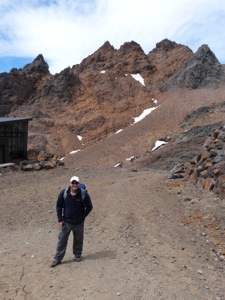
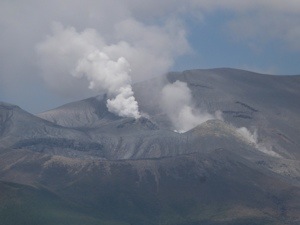
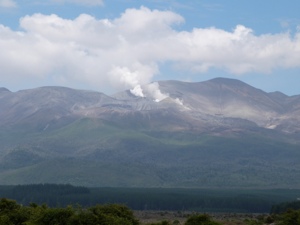
Unfortunately, at the moment the public are only allowed to walk half of the crossing (to the Red Crater @ 1900m) at which point we have to return to base (8-9 hrs allowing time for photos, any sidetracks, lunch and breaks). The paths from the Red Crater are closed as last August and November there were eruptions from the vents on a mountain in the range and we can see that they are still smoking today!
20130223-163338.jpg

What an amazing experience this walk was – the whole place is alive, imposing, violent and fragile. Words are just not enough to describe it!

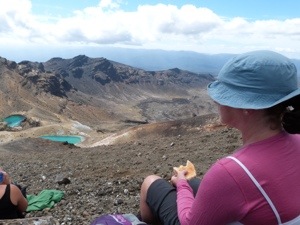
The traverse of the stark and spectacular volcanic terrain of Mt Tongariro is one of the most fascinating treks in NZ. Among its highlights are steaming vents and hot springs, old lava flows, beautiful water filled explosion craters and stunning views. The mountains of Tongariro National Park are sacred to Maori. Mounts Ngauruhoe and Tongariro are active volcanoes and trampers are told to be prepared to move off the mountains quickly if there any signs of volcanic activity – lol.

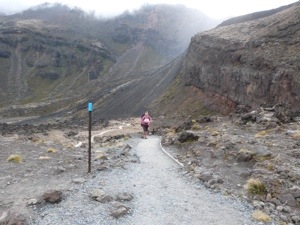
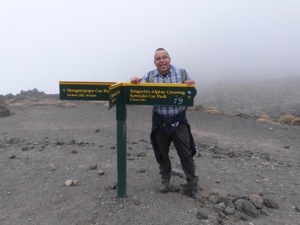
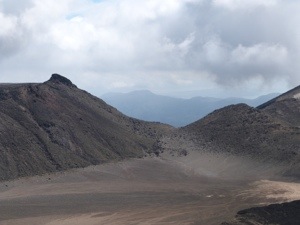
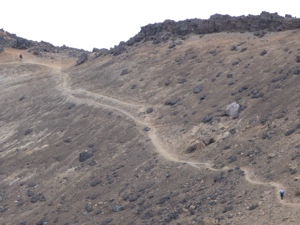
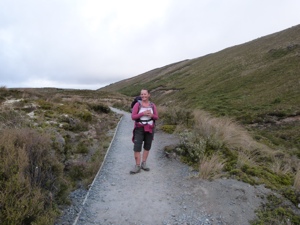
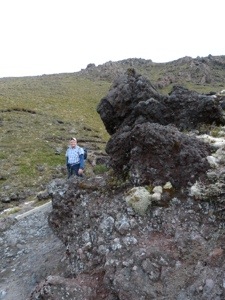
From the Mangatepopo Road Car Park @1100m we walk to the main track and continue at a gentle gradient alongside a stream and around the edges of old lava flows. The track climbs steadily to the South Crater @ 1700m and we are ‘in the clouds’ as we cross over two lava flows from eruptions in 1870 and on this now clear day there are magnificent views from this section of the track. It is here where, for those who want to, you can clim Mt Ngauguhoe (Mt Doom). We continue across the South Crater to a ridge leading up to Red Crater @1886m, a still active crater.
20130223-163833.jpg

20130223-163846.jpg

20130223-163906.jpg

20130223-163919.jpg

20130223-163940.jpg

20130223-163949.jpg

20130223-164017.jpg

20130223-164058.jpg

20130223-164119.jpg

20130223-164136.jpg

20130223-164146.jpg

20130223-164204.jpg

Once at the Red Crater there are spectacular views to the east over the Kaimanawa Forest Park and Desert Road. Looking into the crater, there is an unusual formation within known as a ‘dike’. This feature was formed as molten magma moved to the surface through a vertical channel in the crater wall. The red colour is from the high temperature oxidation of iron in the rock. It is from here that a side trip can be taken to the summit of Mt Tongariro, which Neil completes later in the day.
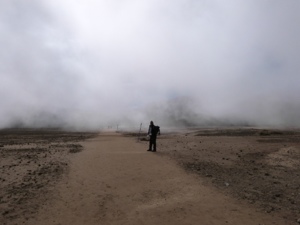
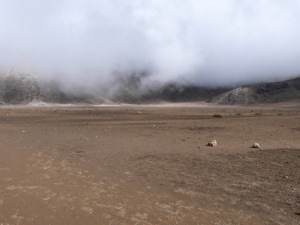
20130223-164437.jpg

20130223-164457.jpg

20130223-164514.jpg

20130223-164527.jpg

20130223-164539.jpg

20130223-164605.jpg

20130223-164659.jpg

20130223-164733.jpg

20130223-164805.jpg

20130223-164830.jpg

20130223-164845.jpg

The summit of Red Crater is the highest point on the Tongariro Alpine Crossing. It is here that we sit on the loose scree of the steep incline and eat our lunch overlooking Emerald Lakes. Minerals leaching from the adjoining thermal area cause their brilliant colour. The Maori name is Ngarotopounamu meaning greenstone-hued lakes The lakes freeze in winter. Due to the recent volcanic activity, it is here that our crossing ends and return the way we came. If we were allowed to carry on, our walk would have skirted the Blue Lake – a cooled lava lake – but we do not miss out on this as we get a good view from where we are.
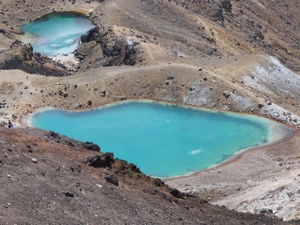
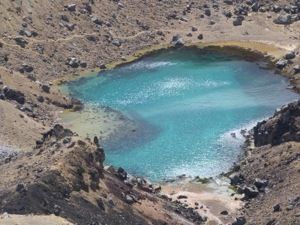
20130223-165140.jpg

20130223-165156.jpg

20130223-165214.jpg

20130223-165228.jpg

20130223-165242.jpg

20130223-165256.jpg

Once we got as far as we could go, we sat and ate our lunch – the best location ever for dining! On top of the world overlooking the trio of Emerald Lakes, Blue Lake and the Red Crater. From here and in front of us, we could also see way into the distance to where the rest of the walk would have taken us. Behind us on one side is the top of Mt Ngauruhoe in all its ‘oh so close’ glory, and on the other is the summit of Mt Tongariro which Neil completes on our way back.

20130223-165538.jpg

20130223-165557.jpg

20130223-165613.jpg

20130223-165628.jpg

Not having walked for a while, our efforts today push us to our limits – 19k over this terrain took its toll and, whilst being very apologetic to our feet and legs, our minds and eyes really appreciated the experience, lol.
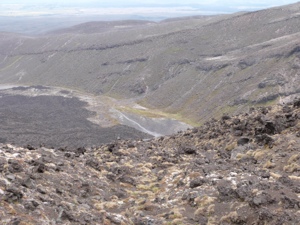
20130223-165804.jpg

20130223-165817.jpg

20130223-165832.jpg

20130223-165844.jpg

9hrs and thousands of footsteps later, we arrive at the car park for our bus back to the village. Well, to the bar in the village which overlooks Mt Ngauruhoe, for a much deserved celebratory drink.
20130223-170011.jpg

20130223-170021.jpg

20130223-170032.jpg

20130223-170044.jpg

20130223-170054.jpg

20130223-170108.jpg

Then it’s back to camp for a freshen up and a ‘Neil Pitkin Gourmet Burger’ then it’s all we can do to manage to drop ourselves into bed – 9pm 😀 – it’s been a most spectacular day!

Fri, 25th Jan: Downtown Backpackers, Wellington (drop off car)
Very surprisingly not too stiff this morning, we are up, packed and away by 9.30am starting the long drive to Wellington. We make good progress and it is another beautiful journey. Arriving in the City at 2.00pm, we are chuffed to find our accommodation right smack bang in the middle of everything – a truly wonderful spot with all the amenities you would ever need. Right in the heart of the Capital City, Downtown Backpackers is the closest accommodation to the Inter-Island Ferry Terminals, the Stadium and is directly opposite the Wellington Railway Station.
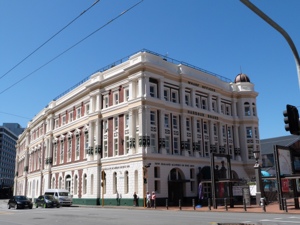
20130223-170329.jpg

20130223-170359.jpg

The Historic Hotel Waterloo that is now Downtown Backpackers was chosen to host the Queen’s entourage on her 1953 Coronation Tour of New Zealand. Therefore when the hotel was converted for budget accommodation, the luxuries remained. Downtown Backpackers has a different feel to that of other budget accommodation properties featuring elegant staircases and high ceilings. The on-site cafe is actually located in the old hotel’s ballroom. The whole atmosphere in the place is great and the really friendly staff interact with you so well.

Once settled, we chill out in the In-House Bar and shoot a few games of pool; didn’t we Neil??? lol. Afterwards, as we walk around the City of Wellington we see a vibrant, compact cluster of heritage buildings and sleek modern high-rises with tree-lined streets. The City has the normal shopping outlets, enticing restaurants, theatres and galleries. Its compact nature and excellent public transport make it easy to get around – which we are grateful for when we leave for the South Island.

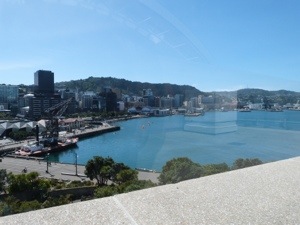
20130223-171004.jpg

20130223-171015.jpg

20130223-171022.jpg

It’s not long before the rumbling in our bellies leads us to The Balti House ………
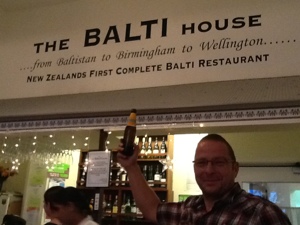
20130223-171206.jpg

20130223-171217.jpg

As we tuck in, we realise that it’s been too long x pmsl. Bellies full, we head off downtown to ‘home’ and fall happily into bed – a perfect Brummie Evening ❤

Sat, 26th Jan: Downtown Backpackers, Wellington
Wow, an extremely lazy morning was had – well, it is Saturday! We lazed in bed watching tv – just like the good old days before travelling, lol – before hitting the cafe for our brunch (a fry up! and it was great) and exploring this gorgeous City.
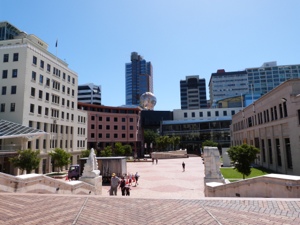
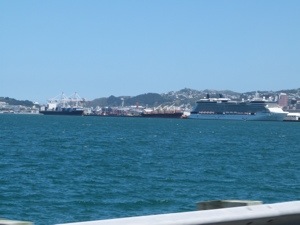
20130223-170605.jpg

20130223-170617.jpg

20130223-170627.jpg

20130223-170710.jpg

20130223-170721.jpg

On this most beautiful sunny Saturday we take the short walk to Te Papa (The Museum of New Zealand), via the Harbour which is an integral part of the city's lifestyle. It is a very lively and scenic waterfront as we make our way down the Harbour's Quays – Waterloo, Customhouse and Jervois. A key attraction, Te Papa, the Museum of New Zealand has prime waterfront location along with numerous bars, cafes and restaurants.

It is the museum which we are heading to and stop for an hour at the Taranaki Wharf Jump Platform, a series of platforms from which the public are jumping into the Wharf!
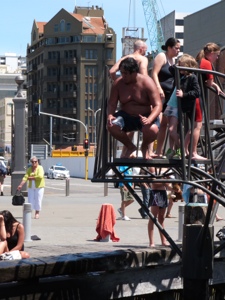

20130223-171433.jpg

20130223-171442.jpg

20130223-171457.jpg

20130223-171525.jpg

Amazingly, there is a huge crowd around this area just watching the antics that are going on and it's very enjoyable to witness. One huge guy just bombs from the platform and, much to the delight of the crowd, creates a great splash of water wetting everybody near the edge. Very funny!

We continue on to Te Papa an extraordinary interactive national museum to 'experience the treasures of Aotearoa New Zealand'. Te Papa Tongarewa literally means 'container of treasures' and, once inside the museum, we discover the treasures and stories of New Zealand's land and people, told with authority and passion. The museum is built on a unique bicultural partnership, which recognises and celebrates Maori as tangata whenua – the original people of this land. The collections are spread over six floors of engaging, interactive displays and we encounter Maoria and Pacific cultural treasures, NZ's extraordinary natural life and its unique history.

We finish the evening at a bar in the harbour watching the sunset ……….
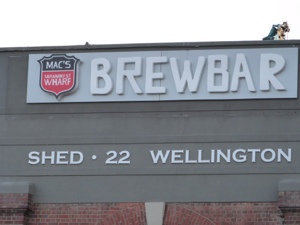
20130223-171713.jpg

20130223-171727.jpg

20130223-171807.jpg

20130223-171821.jpg

20130223-171831.jpg

20130223-171858.jpg

20130223-171910.jpg

… oh yeh, and ‘bump’ into Emile Heskey !!!!!!
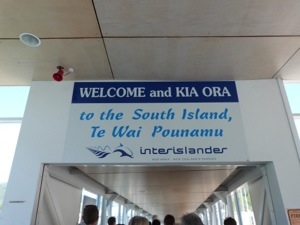
I am a little worse for wear by the time we get back to Downtown Backpackers and poor Neil is left to sort all our luggage out for our epic travelling day to the South Island tomorrow. Bless x